A recent meeting with Charles Paxton, a fisheries ecologist based at the Centre for Research into Ecological and Environmental Modelling at the University of St. Andrews, inspired me to think more about sea serpents [though note that I personally prefer the less loaded term ‘marine cryptid’*]. Charles is one of the few qualified scientists in the world publishing peer-reviewed papers on marine cryptids (Paxton 1998, 2004, Paxton & Holland 2005, Paxton et al. 2005), and while many technical zoologists have expressed an interest in this subject, Charles is pretty much the only one right now who is involved in detailed, empirical work on the subject. As usual, it’s funny how things pan out. For entirely unrelated reasons I’ve been writing about marine cryptids lately (more on that in future), plus I recently found myself writing about oarfishes and sea serpents in response to a post Reid Farmer put up on Steve Bodio’s Querencia blog (go here). During the week I was alerted to new Russian photos allegedly showing a marine cryptid carcass: alas, it is clear from the photos that the carcass is that of a Beluga Delphinapterus leucas.
* Cryptids are animals reported from anecdotal evidence and as yet unknown from museum-accessioned specimens.
While it might seem naïve or daft to think that aquatic cryptids, or sea serpents or whatever, really exist, there are actually reasonably good reasons to think that they do. Firstly, there is little doubt among scientists – I’d like to say ‘no doubt’ but that might be pushing it a bit too far – that large vertebrate species await discovery. By plotting species discovery rates over time to generate a species discovery curve, Paxton (1998) found that as many as 47 large open-water marine animals still await discovery, and new data caused him to up the figure to 51 a few years later (Paxton 2001). New study predicts a lower number (Paxton, pers. comm. 2006), though one that’s still surprisingly high. Raynal (2001) applied the same technique to cetacean discovery rates, and in this case the data suggested that 15 cetacean species await discovery. Solow & Smith (2005) also looked at this issue and concluded that about 10 large marine animal species await discovery, though they also found good statistical support for the possible presence of as many as 16 undiscovered species.
Secondly, such discoveries are not a hypothetical future event, but occur regularly, right here, right now. Megamouth shark Megachasma pelagios, discovered in the Pacific in 1976 and named in 1983*; Bandolero beaked whale (aka Peruvian or Lesser beaked whale) Mesoplodon peruvianus, known from specimens discovered 1975-1989, named as a new species in 1991; Spade-toothed whale M. traversii, named in 1874 but later sunk into synonymy: resurrected in 2002 when found to be synonymous with M. bahamondi (a supposedly new species named in 1995); Perrin’s beaked whale M. perrini known from specimens discovered 1975-1997 and named as a new species in 2002; Indonesian coelacanth Latimera menadoensis, discovered in 1997 and named in 1998; Omura’s whale Balaenoptera omurai, first collected in late 1970s and named in 2003; Australian snubfin dolphin Orcaella heinsohni, named in 2005.
* Megamouth sharks were discovered in the Atlantic in 1995, and the 2004 discovery of a morphologically unusual specimen in Sumatra has led to the suggestion that a second species might await recognition (White et al. 2004).
Thirdly, the eyewitness evidence for marine cryptids is pretty good, in some cases being consistent across accounts and reported by trained observers who had a reputation to protect. They include military personnel and experienced naturalists. I could write thousands of words on such cases, so will hold off and only mention one: the Valhalla incident of 1905. Aboard the Valhalla were E. Maede-Waldo and Michael Nicoll, and it was while off the Brazilian coast that they were able to observe an unidentified long-necked, tall-finned marine creature through binoculars. Later written up and published in the technical literature (Maede-Waldo & Nicoll 1906), it is one of the best marine cryptid reports, clearly describes an unknown animal, and was made by scientists who went on to make names for themselves in the zoological world. Note that the existence of marine cryptids has been taken seriously, or even supported, by some pretty influential individuals, among them Thomas Huxley, D’Arcy Thompson, William Pycraft, J. L. B. Smith, Maurice Burton, Gavin Maxwell, Denys Tucker and Robert Menzies.
Of those marine cryptids that have attracted academic attention, perhaps the best known is that popularly dubbed ‘Caddy’ or ‘Cadborosaurus’, an enigmatic serpentine animal reported from the waters around the coasts of British Columbia. Named after Cadboro Bay, a sightings hotspot, Caddy sightings are impressively consistent, with most reports mentioning a large-eyed, horse-like or camel-like head (often with short horns), a long neck, serpentine body, a pair of flippers and a bifid, horizontal tail (LeBlond & Bousfield 1995). It is large, with estimated lengths ranging from 5 to 15 m. The animal’s body is often reported to sport brownish hair, and a serrated ridge is sometimes said to be present along the dorsal surface. Caddy has been described apparently pursuing and catching fish, and several accounts describe the animal snapping at, and even catching and eating, seabirds. It seems difficult to explain all of the sightings away as of misidentified cetaceans, elephant seals or large fish, and for now the identity of this creature remains a valid zoological mystery.

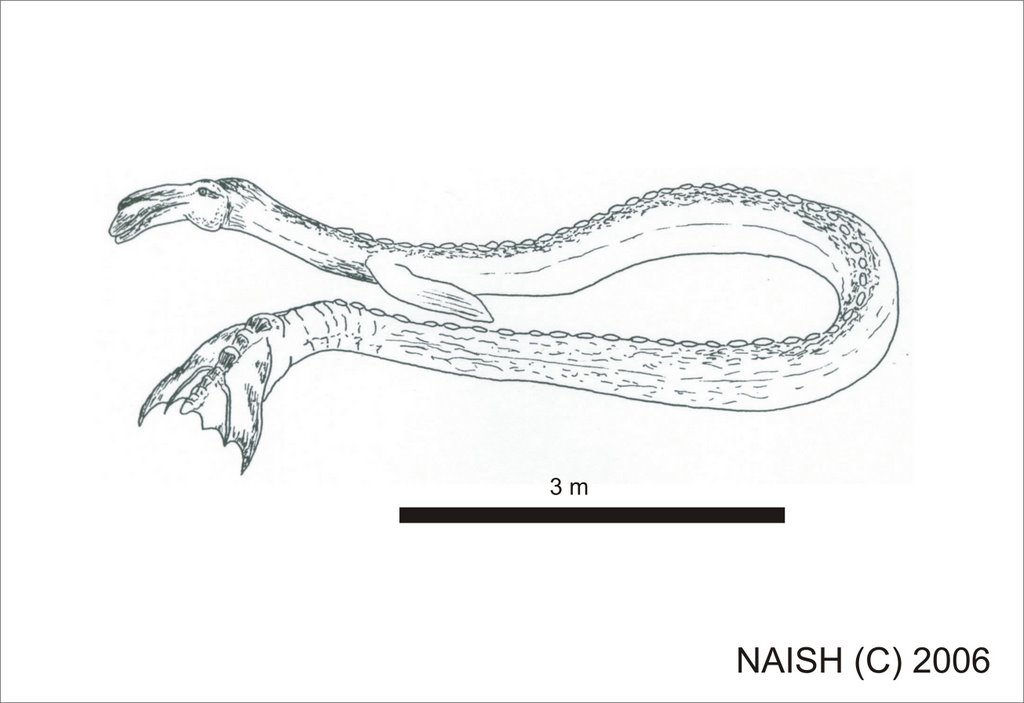
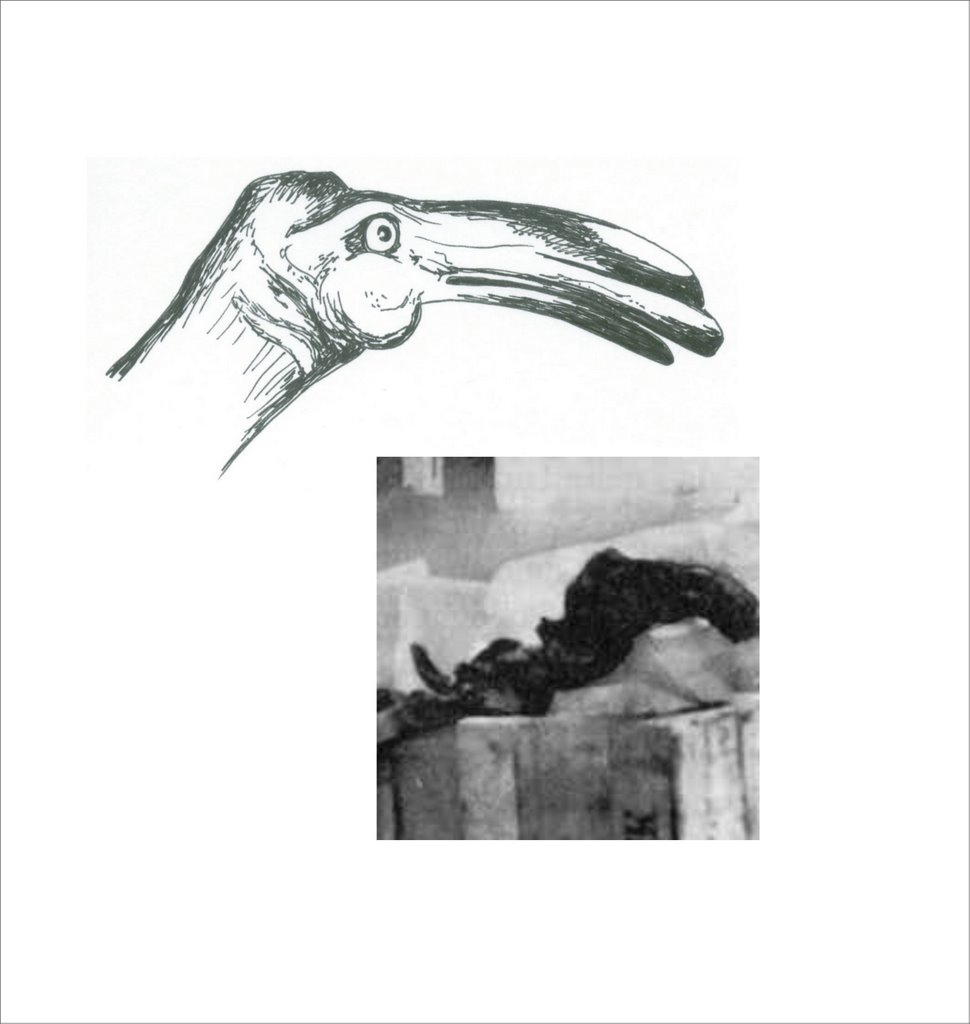
In 1992 Ed Bousfield, retired Research Associate at the Royal Ontario Museum, Toronto, and the Royal British Columbia Museum in Victoria, and Paul LeBlond, professor at the Department of Oceanography, University of British Columbia (Vancouver), announced some startling pieces of evidence - three photos, taken in 1937 on the flensing platform of a whaling station at Naden Harbour in the Queen Charlotte Islands, that depict a large serpentine carcass. Retrieved from the stomach of a sperm whale Physeter macrocephalus, the carcass is about 3 m long, long-bodied, and appears to have a camel-like head and a fluked tail. It obviously struck the whalers as unusual, otherwise they wouldn’t have gone to the trouble of setting it up on crates or photographing it. Suggestions that it is an elephant seal or baleen whale don’t seem realistic in view of certain of its features. These include an apparently symmetrical caudal fluke-like distal structure with a central series of knobs that appear to correspond to vertebrae (see close-up of photo and adjacent interpretative drawing below), and a camel-like ‘head’. The ‘body’ is elongate and serpentine and there appear to be pectoral flippers. While parts of the carcass were apparently retained and forwarded to the Pacific Biological Station at Nanaimo and/or the Royal British Columbia Museum, Victoria, no material remains today and the specimen is regarded as lost to science (Bousfield & LeBlond 1995, p. 9).
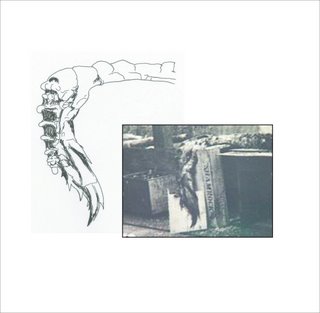
By combining observations on this carcass with eyewitness reports, Bousfield and LeBlond formally described Caddy as a new species, Cadborosaurus willsi and in 1995 devoted Supplement 1 of the new journal Amphipacifica to their paper on this taxon (Bousfield & LeBlond 1995). One of the Naden Harbour photographs was selected as the holotype of the ostensible new species. Bousfield and LeBlond proposed that Cadborosaurus might represent a surviving plesiosaur (on p. 8 it is classified as ‘Class Reptilia, Subclass Euryapsida?, Order Plesiosauria?’) and made speculations about its lifestyle, style of locomotion, feeding behaviour, and even its breeding behaviour and physiology (see Bousfield & LeBlond 1992, Park 1993 and Dash 1993 for earlier speculations).
As mentioned above, while the number and quality of Caddy eyewitness accounts suggests that there may indeed be a new species awaiting discovery in the region, Bousfield and LeBlond’s proposal that the creature might be a living plesiosaur, and that such a species can be officially described and diagnosed based only on controversial photographic data, is highly problematical. Indeed an editorial that accompanied the publication of the Cadborosaurus description decried the lack of restraint employed by Bousfield and LeBlond, and strongly disagreed with the naming of the new species (Staude & Lambert 1995). These authors also noted that ‘Certainly it would have been preferable for [Bousfield and LeBlond] to publish in an independent journal, where neither served on the editorial board’ (p. 2). Aaron Bauer and Anthony Russell (1996) published a detailed critique of Bousfield and LeBlond’s paper, and I independently arrived at similar criticisms myself. The problems with Bousfield and LeBlond’s Cadborosaurus description can be grouped into three main areas.
1. How not to name a new species
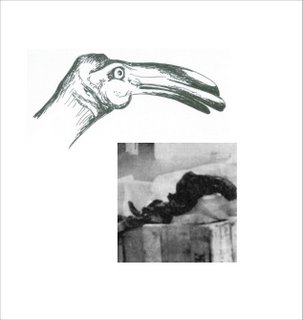
Firstly, establishing a new species on the basis of a photo is just not acceptable: article 72(c)(v) of the International Code of Zoological Nomenclature states that the actual specimen figured or described, and not the illustration or description, must serve as the holotype. The name Cadborosaurus willsi, based on a photograph and not the specimen it depicts, therefore has no official standing and should be ignored. There are lots of other species names that have been coined in the cryptozoological literature in the absence of holotype specimens, and all are similarly nomina nuda that have no useful status. They include not only marine cryptids and relict hominids, but the Vietnamese snake Cryptophidion annamense, described from photos by Wallach and Jones (1992).
2. An erroneous identification
As discussed at depth in their book (LeBlond & Bousfield 1995), Bousfield and LeBlond favoured a reptilian identity for Cadborosaurus. Predominantly this is because they concluded that – in view of its elongate shape and occurrence in cold waters – Caddy must be poikilothermic. Jointed elements in the Naden Harbour specimen’s ‘tail pseudo-fluke’ (their term) were interpreted by Bousfield and LeBlond as being homologous with the hindlimb elements of Mesozoic marine reptiles, and they pointed in particular to a close similarity with the hindlimb of a pachypleurosaur (pachypleurosaurs are Triassic members of Sauropterygia, the reptile clade that includes plesiosaurs). Actually, while their figure (fig. 13C) definitely depicts the hindlimb of a pachypleurosaur, they identified it in their figure caption as the hindlimb of the plesiosaur Cryptoclidus. Furthermore, they mis-labelled most of the bones, identifying the tibia as the fibula, digit I as digit V and so on. [The image above shows a close-up of the carcass's 'head' together with an interpretative drawing, based on that provided by Bousfield & LeBlond (1995).]
The point of figuring a sauropterygian hindlimb was to show how the skeletal structure of the sauropterygian limb resembled the inferred bony structure of the Naden Harbour ‘tail pseudo-fluke’. However, this ignores the fact that all tetrapods have the same elements in their hindlimbs as do sauropterygians, so the case for interpreting Cadborosaurus as a possible extant sauropterygian lacks supporting evidence. Whatever its true morphological homology, it has to be said that the ‘tail’ of the Naden Harbour carcass is pretty odd – it does look as if there is a series of vertebrae, adjacent to which is a soft-tissue fin of some kind, but it is stretching things too far to assume, as Bousfield & LeBlond (1995) did, that the soft-tissue fin was originally one of a pair of modified hindlimbs.
3. Inappropriate speculation, disturbing naivety
Overall, the Cadborosaurus description lacks the sort of academic rigour and restraint that is normal for taxonomic descriptions, so rather than bringing academic respectability to the study of Caddy it achieved just the opposite. With all due respect, Bousfield and LeBlond clearly did not do their homework when it came to some critical areas. If you are to seriously attempt to discuss the biology and morphology of any group of organisms in the academic literature, you must yourself consult the appropriate technical work that has previously been published: it is far from wise to rely on popular articles in magazines and encyclopaedic reference works written for laypeople. In their discussion of sauropterygians and basilosaurid cetaceans, for example, Bousfield and LeBlond cited popular and semi-popular works as their most authoritative references and apparently did not consult any of the technical literature on these subjects. Bauer & Russell (1996) noted that some of the terminology used by Bousfield and LeBlond implied ‘unfamiliarity with the literature’, and it’s telling that Bousfield and LeBlond referred to the archaic cetaceans Basilosaurus and Zeuglodon as if they were different, related genera, whereas in fact it has been widely acknowledged since the 1870s as least that Zeuglodon Owen is a junior synonym of the former.
 Also, one cannot seriously begin to write about plesiosaurs without consulting and citing articles produced by such workers as Welles, Riess, Massare, Cruickshank, Taylor, Brown, Bardet and Storrs: authors who have provided a wealth of functional, behavioural, taxonomical and morphological literature, much of which (e.g., hydrodynamics, ecology and feeding behaviours) would have been very pertinent to Bousfield and LeBlond’s speculations. Maybe if they had understood more of plesiosaur anatomy and functional morphology they would have sensibly reconsidered their proposal that Cadborosaurus was a possible plesiosaur descendant. It is actually very difficult to imagine a tetrapod MORE unlike a plesiosaur than is Cadborosaurus.
And having mentioned speculations, it has to be said that the number of speculations that Bousfield and LeBlond included within the paper are inappropriate for a work masquerading as a technical description, never mind the fact that those speculations were fantastic and logically flawed. It was proposed, for example, that the hair reported on Caddy might have a respiratory function (analogous to the hair-like growths seen on the frog Trichobatrachus), that the serpentine Cadborosaurus might somehow form a tuna-like body shape by bunching up the coils of its long body, that Caddy is viviparous and gives birth to large precocial babies, and that Caddy might be able to employ echolocation (Bousfield & LeBlond 1995). If these proposals sound nonsensical, or just extremely speculative and lacking in justification, that’s because they are.
So what now?
For me, the story of the Naden Harbour carcass has been a fascinating tale of discovery and interpretation, and I certainly agree with Bousfield and LeBlond that the subject is deserving of attention and study, as are Caddy reports in general. But I regret the way in which the whole issue was dealt with, and I wish that improved scientific rigour, restraint, and a far more cautious approach to description and identification, had been adopted. In fact a technical publication on the specimen seems entirely appropriate, but not one that includes the speculation that Bousfield and LeBlond indulged in, nor one that names an ostensible new species based on photographs.
If the Naden Harbour specimen is a real animal, and if it belongs to the same species as the cryptid seen in British Columbian waters, then it’s a big deal. But how sure are we of this? While the Naden Harbour specimen looks like a highly unusual, apparently new type of vertebrate animal, the possibility that it represents the mangled remains of a known animal remain to be eliminated. Bauer & Russell (1996) suggested that the carcass might have been that of a Basking shark, the rotting corpses of which are known to take on a bizarre pseudo-plesiosaur appearance after losing the gill arches, much of the tail, and other parts of the body. Similarly, Ben Speers-Roesch also argued (albeit not in print) that the carcass might be that of a Basking shark: he noted that various detailed structures seen on the body segments of the Naden Harbour carcass strongly resemble features present on Basking shark vertebrae. This is an intriguing idea that requires further consideration – if these workers are right then the similarity that the carcass has with Caddy eyewitness reports is of course coincidental.
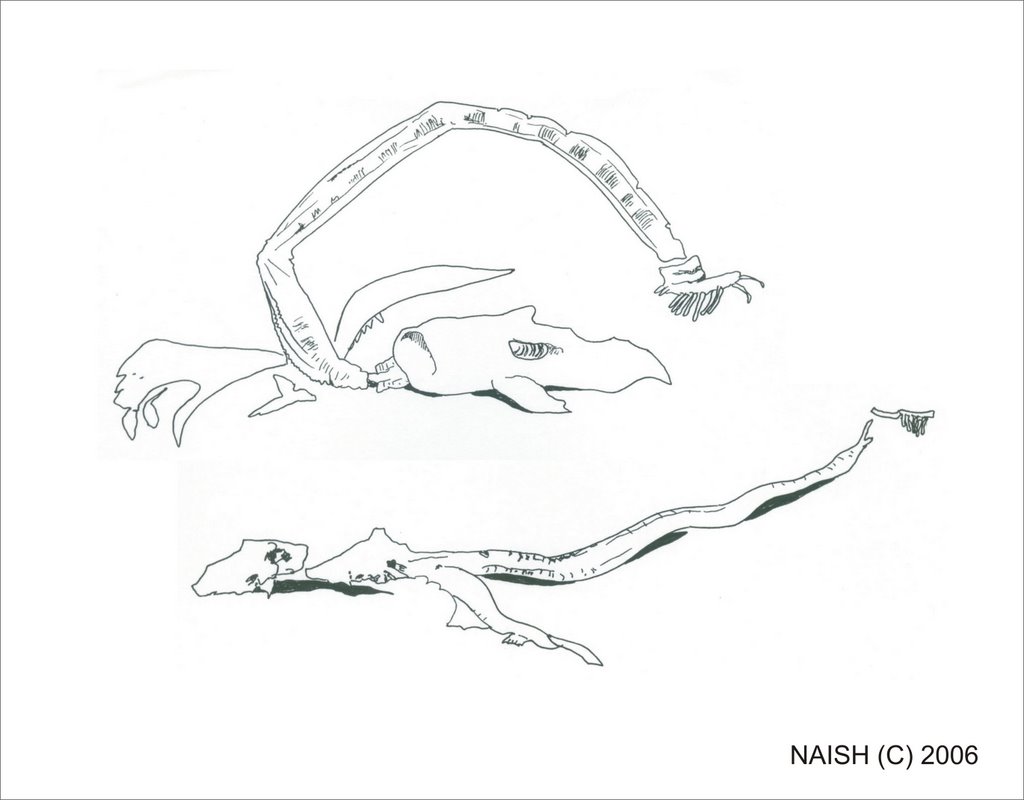
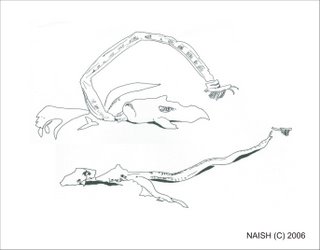 It’s also interesting that photos of an alleged ‘carcass’ very much like those taken at Naden Harbour were published as postcards in the 1930s (see adjacent interpretative drawings). Taken on the beach at Camp Fircom, British Columbia, examination led me to conclude that they do not represent an animal carcass of any kind, but are in fact composed of a montage of beach debris. A stem of kelp serves as a body and a large white rock (with a mussel shell as an eye) poses as a skull (Naish 1997). I would like to emphasise however that the Camp Fircom specimen is nothing to do with the Naden Harbour carcass. Having said that though, some people in the 1930s were clearly in the habit of manufacturing fake ‘Caddy’ carcasses, so we have to consider the idea that the Naden Harbour carcass might also have been a product of this episode of trickery. This possibility has to be discounted before it can be assumed that the thing represents an animal. And here the story ends.
Finally, below is an excerpt from an article by Francois de Sarre and Michel Granger that mentions both Cadborosaurus and yours truly. The article was called Le serpent de mer existe bien! and appeared in Le Courrier of December 15th 1996. I don’t recall saying what they seem to be saying I said (…. if that makes sense).
----------------------------------------------------------------------------------------
Serpent de terre
En 1991, un cadborosaurus fut même signal
Ce qui semblerait accréditer la filiation heuvelmansienne ‘mammalienne’ (issue du phoque ou du cétacé) plutôt que celle voulant voir un descendant du fameux plésiosaure peu enclin à s’aventurer sur le sol.
L’absence systématique de queue appuie aussi cette descendance pinnipède, meme s’il est difficile d’imputer à une otarie la légende du serpent de mer.
Elle conviendrait beaucoup mieux, cepen-dant, pour décrire certains monstres de lacs tel Nessie, le célèbre monstre du Loch Ness.
Et pourrait fournir, par un processus de déplacement ‘à nageoires sèches’, le passage dans le lack Okanagan, toujours en Colombie Brittanique, du monstre de Ogopogo.
Quand la nuit ou l’obscurité se fait à la tombée du jour, vous voyez une bête d’une vingtaine de mètres de long qui ondule à travers la campagne à la façon d’une chenille, raconte-t-on dans la région.
Un descendant des baleines?
Cette possibilité n’est pas exclue par le cryptozoologue brittanique Darren Naish quie met la description d’anneaux décollés de l’eau sur le compte de l’imagination des témoins. Mais, à notre avis, la question ne pourra être tranchée tant que d’autres éléments ne seront pas ajoutés au dossier du ‘monstre’. Par exemple, il n’est pas impossible qu’un filet de pêcheur résolve un jour l’énigme si ce n’est déjà fait. Les biologistes marins canadiens affi-chent un très bel optimsme dans ce sens. A quand un Cadborosaurus nageant dans un Marineland? Le fait d’envoyer un petit bathyscaphe dans la baie de Cadboro pour filmer la bête dans son milieu naturel pourrait bein aboutir comme ce fut le cas aux Commores pour les coleacanthe.
Les sceptiques n’ont qu’à bien se tenir. Pour notre part, nous pouvons affirmer: le légendaire serpent de mer existe bel et bein...
----------------------------------------------------------------------------------------
For previous blog posts on marine cryptids see Swan-necked seals and Gambo rides again. And for the latest news on Tetrapod Zoology please go here.
Refs - -
Bauer, A. M. & Russell, A. P. 1996. A living plesiosaur?: a critical assessment of the description of Cadborosaurus willsi. Cryptozoology 12, 1-18.
Bousfield, E. L. & LeBlond, P. H. 1992. Preliminary studies on the biology of a large marine cryptid in coastal waters of British Columbia. American Zoologist 32 (abstracts): 2A.
- . & LeBlond, P. H. 1995. An account of Cadborosaurus willsi, new genus, new species, a large aquatic reptile from the Pacific coast of North America. Amphipacifica 1 (Supplement 1), 3-25.
Dash, M. 1993. The dragons of Vancouver. Fortean Times 70, 46-48.
LeBlond, P. H. & Bousfield, E. L. 1995. Cadborosaurus: Survivor from the Deep. Horsdal and Schubart Publishers (Victoria, B.C.).
Maede-Waldo, E. G. B. & Nicoll, M. J. 1906. Description of an unknown animal seen at sea off the coast of Brazil. Proceedings of the Zoological Society of London 2 (1906), 719-721.
Naish, D. 1997. Another Caddy carcass? The Cryptozoology Review 2 (1), 26-29.
Park, P. 1993. Beast from the deep puzzles zoologists. New Scientist 137 (1857), 16.
Paxton, C. G. M. 1998. A cumulative species description curve for large open water marine animals. Journal of the Marine Biologists Association, U.K. 78, 1389-1391.
- . 2001. Predicting pelagic peculiarities: some thoughts on future discoveries in the open seas. In Heinselman, C. (ed) Dracontology Special Number 1: Being an Examination of Unknown Aquatic Animals. Craig Heinselman (Francestown, New Hampshire), pp. 60-65.
- . 2004. Giant squids are red herrings: why Architeuthis is an unlikely source of sea monster sightings. The Cryptozoology Review 4 (2), 10-16.
- . & Holland, R. 2005. Was Steenstrup right? A new interpretation of the 16th century sea monk of the Øresund. Steenstrupia 28, 39-47.
- ., Knatterud, E. & Hedley, S. L. 2004. Cetaceans, sex and sea serpents: an analysis of the Egede accounts of a “most dreadful monster” seen off the coast of Greenland in 1734. Archives of Natural History 32, 1-9.
Raynal, M. 2001. Cryptocetology and mathematics: how many cetaceans remain to be discovered? In Heinselman, C. (ed) Dracontology Special Number 1: Being an Examination of Unknown Aquatic Animals. Craig Heinselman (Francestown, New Hampshire), pp. 75-90.
Solow, A. R. & Smith, W. K. 2005. On estimating the number of species from the discovery record. Proceedings of the Royal Society B 272, 285-287.
Staude, C. P. & Lambert, P. 1995. Editorial… an opposing view. Amphipacifica 1 (Supp. 1), 2.
Wallach, V. and Jones, G. S. 1992. Cryptophidion annamense, a new genus and species of cryptozoic snake from Vietnam (Reptilia: Serpentes). Cryptozoology 11, 1-37.
White, W. T., Muhammad Adrim, F. & Sumadhiharga, K. 2004. A juvenile megamouth shark Megachasma pelagios (Lamniformes: Megachasmidae) from northern Sumatra, Indonesia. The Raffles Bulletin of Zoology 52, 603-607.
Labels: cryptozoology, marine reptiles, sea serpents
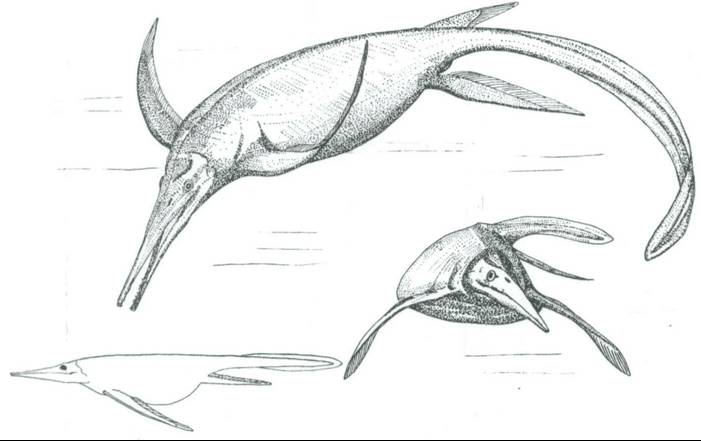
 Or, it would do, were there not some modern-day forms that possess many of the same features as the ichthyosaurs, but which do not fly. Part of Riess’ case for flight in ichthyosaurs was based on analogy with two living animals: the Australian lungfish (Neoceratodus) and the
 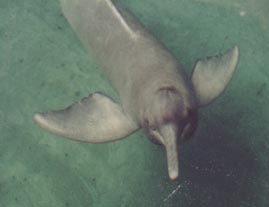 One clear correlation that does appear to be true for swimming vertebrates concerns that tail. Essentially, if an animal has a propulsive surface on the end of its tail, it uses it. Riess thought that some ichthyosaurs, his example was the Lower Jurassic genus Leptonectes*, both flapped with the forefins, and used the shark-like vertical tail to steer. However, studies of ichthyosaur locomotion, notably those by Christopher McGowan and Michael A. Taylor, have demonstrated that the ichthyosaur tail was a powerful organ of propulsion. Indeed, it is hard to explain the evolution of this important and superbly hydrodynamic feature if it was used merely for steering rather than for active and constant use.