Wednesday, November 29, 2006

Frame 352, and all that
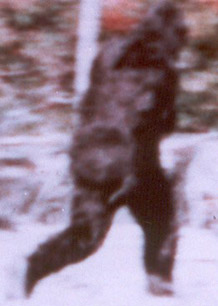
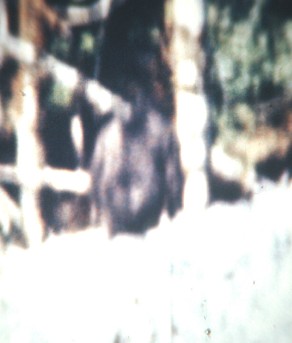
For some time now I’ve been toying with the idea of writing a blog post about sasquatch, North America’s legendary cryptic ape. And, generally, I’ve decided that doing so would be a really bad idea: I am chicken, and as someone trying to gain a reputation within the academic world, I think that even expressing an interest in issues like this is a bad idea. That’s ridiculously unfair of course, stemming only from ill-informed knee-jerk negativity to this subject, and given that scientific inquiry of any phenomenon is a worthwhile pursuit, I like to think that more zoologists should actually get informed about mystery animals (for a previous post making the same argument go here). I note that hardly any hard-line sceptics of things such as sasquatch display familiarity with the literature on the subject [adjacent image shows frame 310 of the Patterson film: see below].

In the interests of hypothesis testing, I finally decided: what the hell. My hypothesis is: will writing about sasquatch negatively affect my career prospects? Well, let’s test the hypothesis. Let me state from the start that I do not “believe” in sasquatch, nor am I planning to promote either an anti-sasquatch, or a pro-sasquatch, point of view. What I have learnt from research on this area is that – contrary to the assertions of some – the evidence for sasquatch is, at the very least, scientifically interesting and worthy of investigation.

While purported evidence for the supposed reality of sasquatch continues to attract strong criticism, more interesting in my view is that a number of academically qualified primatologists have recently gone on record in stating that the evidence for sasquatch is scientifically compelling. These people do not only include well-known sasquatch proponents, such as the late Grover Krantz (1931-2002) of Washington State University, or Jeff Meldrum of Idaho State University. Daris Swindler (professor emeritus of physical anthropology at the University of Washington, author of Atlas of Primate Anatomy) stated, after examining the Skookum body cast (a large impression, made in mud, from Washington state, apparently created by a reclining man-like primate), that the heel impression visible on the cast is definitely that of a giant unknown primate. J. H. Chilcutt, an expert on human and non-human primate fingerprints (who initially examined casts of sasquatch tracks because he felt confident that he could debunk them), has expressed his absolute confidence in the validity of dermal ridges on footprints as demonstrative of the reality of sasquatch. On the Whitewolf Entertainment TV documentary ‘Sasquatch: Legend Meets Science’ (2003) he stated “I stake my career on it”.

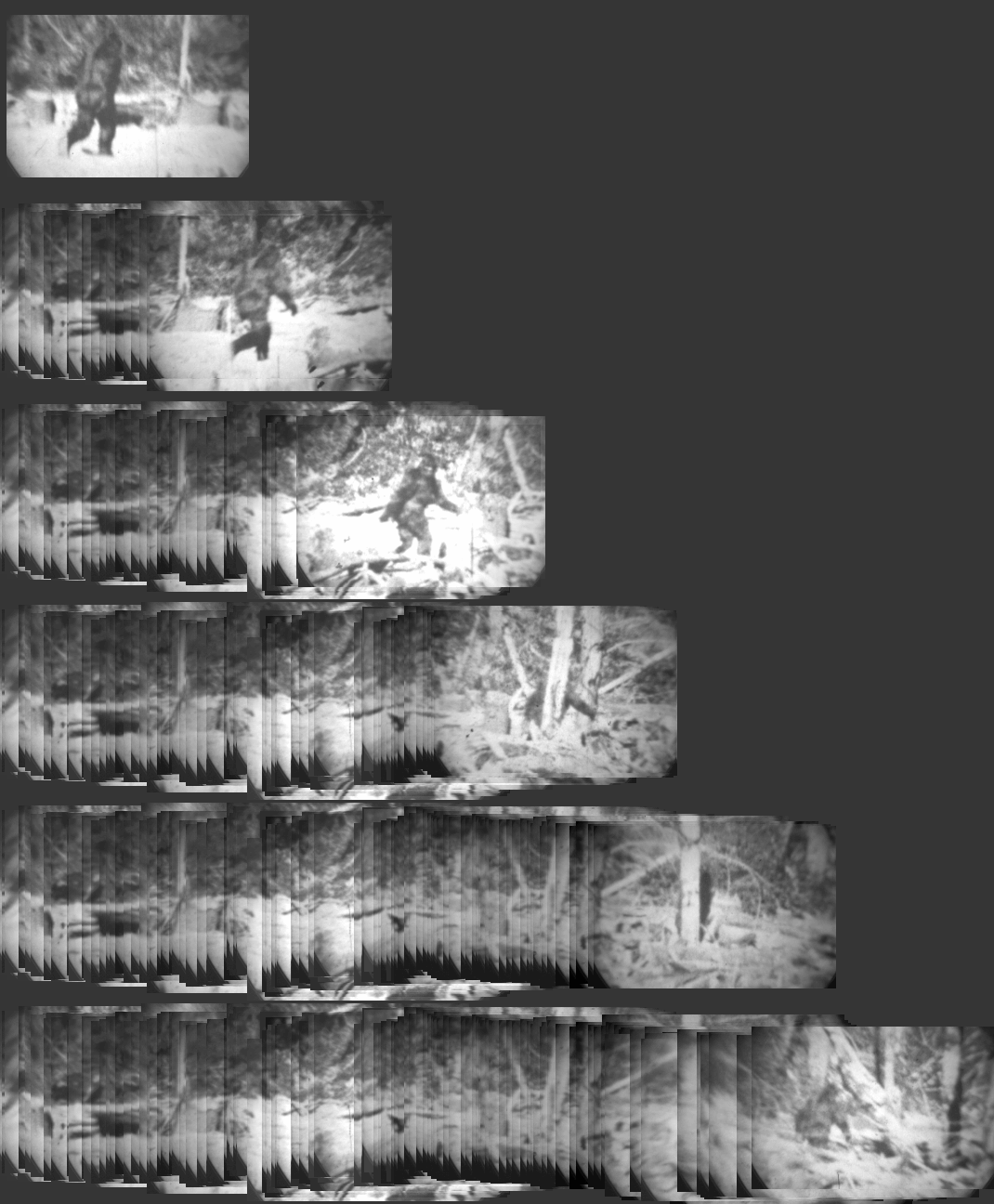
Here I am going to discuss one particular piece of evidence for sasquatch: the Patterson-Gimlin film. This is that famous short piece of film that you’ve probably seen on TV many times: it depicts what appears to be an obviously female sasquatch striding across a clearing from left to right [for M. K. Davis’ stabilised version of the film go here]. You’ve probably heard that the film has been revealed to be a hoax. Well, sorry, that ain’t true.
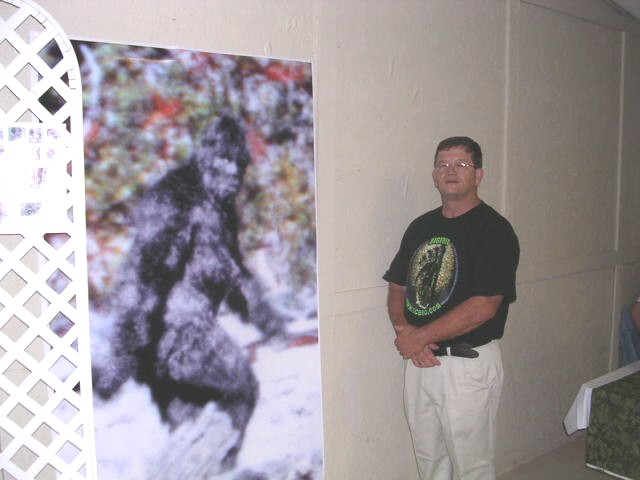
On October 20th 1967, Roger Patterson and Robert Gimlin claimed to capture on film an unexpected encounter with an adult female sasquatch. The resulting footage, filmed at Bluff Creek, northern California, contains 952 frames, but uncertainty over the filming speed affects the real-time duration of the event. Patterson’s camera was either set at 16 or 24 frames per second (fps), with 16 fps now considered more likely. It is not true that the footage is grainy or blurry, and high-resolution enlargements such as those produced by M. K. Davis (here shown standing next to the best of the enlargements) reveal a surprising amount of detail. Literally whole books have been written about the footage (e.g. Bayanov 1997), so I will try and keep these comments brief. In order to be impartial, I will refer to the alleged sasquatch as TAS (= The Alleged Sasquatch).

1. TAS looks genuine. Its coat is glossy, conforms to the underlying contours, muscular bulges, joints and other structures in the body, and looks realistic compared to living mammals. What appears to be a shallow parting extends axially along the spine and between the buttocks [in adjacent image, note the demarcated buttocks and apparent wear on the buttocks]. As TAS moves, its muscles (in its legs and elsewhere) can be seen to bulge and flex beneath the fur as they do in living mammals. TAS’s gait is fluid and natural and it differs in subtle details of posture and proportion from humans (see points 2 and 3). Its toes are seen to lift at one point. Its large breasts bounce and sway in a manner which looks realistic compared to how unsupported human breasts move during locomotion. It is also intriguing that TAS’s compliant gait and protruding heel match features reported by eyewitnesses (see point 2). High quality enlargements have been published of key frames from the footage several times (e.g. Bayanov 1997, Murphy et al. 2004) so it is easy to check all of these assertions. Put in its simplest terms: despite claims to the contrary, TAS looks realistic.

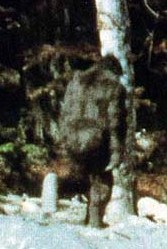
2. TAS walks with a compliant gait, and not with the same striding knee-locking gait of humans [adjacent image shows frame 352, the most famous and oft-shown part of the film]. Its knee is never fully straightened in its step cycle, even in the supporting phase. Its arms swing slightly more than those of humans, and its hands and wrists are held supinated and slightly flexed with the fingers curved (this is unlike the normal hand posture of humans). It’s clearly possible that all of these features could be faked by a knowledgeable human, and Daegling & Schmitt (1999) argued that the gait and speed used by TAS can be reproduced by humans. That person would, however, have to not only conform physically to the dimensions of TAS (see point 3), but would also have to be very good at walking with an unusual gait which is practised so well that it has convinced experts in biomechanics and primate anatomy (see point 4). That person would also have to be an expert, or at least supervised by one, on the eyewitness data (which describes identical points of posture and morphology). It is unlikely that such a person exists and/or was available to Patterson and/or Gimlin in 1967, and extensive biographical research on Patterson and Gimlin and their friends and colleagues has failed to uncover the existence of any such person.

3. TAS is physically large and with proportions that appear to be unlike those of our species. Its intermembral index (the ratio of humerus + radius length to femur + tibia length) is between 80 and 90, whereas in our species it averages 72*, and its breadth across its shoulders is about 35% of its total height. Krantz (1999) asserted that some humans (including inuit people) have a shoulder breadth that exceeds 30% of total height (this is apparently not the case in people that exceed 2 m in height), and that other data also indicates that the creature exceeds in torso width any human. Krantz (1999) concluded on the basis of this evidence ‘I can confidently state that no man of that stature is built that broadly’. However, Daegling & Schmitt (1999) challenged this torso-breadth data, and argued that the estimates do overlap with that from tall humans.

* In chimps and gorillas the intermembral indices are 106 and 117, respectively. TAS therefore seems intermediate between chimps and humans with regard to this feature.

Patterson and Gimlin photographed, and took casts from, a trackway which (they asserted) was made by TAS. These photographs and tracks survive today and both (i) appear genuine* and (ii) correspond with the details of TAS’s size and gait as seen in the footage. Average track length was 36.8 cm, and because the full length of TAS’s foot sole can be seen in several frames, the sole : total height ratio of about 1 : 5 gives a rough height of 184 cm. A similar height has been estimated by triangulation, by working out how the stride length used by TAS matches with humans of various statures, and by other methods.


* That is, like other ‘good’ sasquatch prints, they appear to have been made by a large, very heavy hominid with a flexible foot that exhibits several consistent anatomical novelties.
4. Several workers experienced with primate biomechanics and locomotion have examined the footage, and in several cases have published comments on it. All have concluded either that the film is genuine and depicts a non-human primate, or have admitted that their examination was inconclusive.

Dmitri Donskoy [Chief of the Chair of Biomechanics at the USSR Central Institute of Physical Culture, Moscow] concluded ‘[my analysis reveals] the walk of the creature as a natural movement without any signs of artfulness which would appear in intentional imitation. At the same time, with all the diversity of human gaits, such a walk as demonstrated by the creature in the film is absolutely nontypical of man’.

D. W. Grieve [Reader in Biomechanics, Royal Free Hospital School of Medicine, London] concluded ‘The possibility of fakery is ruled out if the speed of the film was 16 or 18 fps [as mentioned above, it was apparently filmed at 16 fps]. In these conditions a normal human being could not duplicate the observed pattern, which would suggest that the sasquatch must possess a very different locomotor system to that of man’.

Grover Krantz, well known as an advocate of sasquatch but nonetheless still an experienced and qualified anthropologist, argued that the creature’s size, proportions and gait demonstrated its genuine nature, concluding ‘there is no possibility that the film can be a man in a fur suit’. Bayanov (1997) cited views from several Russian biomechanists who thought that the creature’s gait could not be reproduced by a human. Jürgen Konczak [associate professor in the
School of Kinesiology and director of the Human Sensorimotor Control Laboraties at Minnesota University] concluded that the creature’s gait indicated that it was genuine and non-human. Other ‘positive’ interpretations of the footage, voiced by experienced, qualified biomechanists and/or primatologists, were broadcast in the Whitewolf Entertainment TV documentary ‘Sasquatch: Legend Meets Science’ (2003).

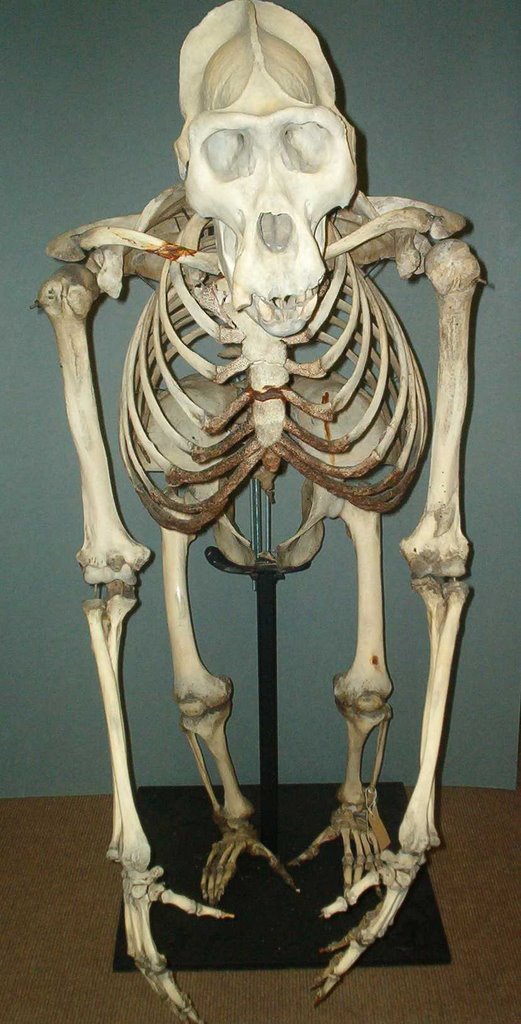
In view of this large number of ‘positive’ interpretations, most of which come from authoritative, technically qualified experts who do not have any axe to grind on the issue of sasquatch, what evidence has been marshalled by those who assert that the film is faked? To date, none. No analysis has been performed which shows that the creature can be explained as a man in a suit. Published objections have either asserted that the animal walks in a manner ‘consistent in general terms with the bipedal striding gait of modern man’ (Napier 1974), or have pointed to the presence of furry breasts, the presence of a sagittal cranial crest in a female, or the presence of breasts in a creature without female-like hips and a waist, as problems showing that the film must have been faked. These objections are all clearly erroneous (e.g. it is difficult to be confident that furry breasts are somehow impossible – while many primates do sport naked pectoral skin around their nipples and areolae, human breasts are hairy, it’s just that the hairs are very small and thin; sagittal crests are size-related, and only absent in the females of most hominid species because females do not match adult males in the size of their cranial musculature; broad hips and a waist are characters of our species, and not of other hominids or primates [gorilla skeleton at left]). Napier’s objections were vague and have not been supported by other workers experienced in biomechanics.

David Daegling [associate professor of anthropology at Yale University] and Daniel
Schmitt [assistant professor in the Department of Anthropology, Duke University Medical Center] published an article in Skeptical Inquirer in which they argued that TAS’s size and style of gait can be reproduced by people. They were still unable to assert that it was fake however, concluding ‘Based on our analysis of gait and problems inherent in estimating subject dimensions, it is our opinion that it is not possible to evaluate the identity of the film subject with any confidence’.

Multiple claims have been made that the footage was faked by a known individual, and that this individual has provided a death-bed confession, or something like that. It has been easy to knock down all of these claims and show them to be fabrications (e.g. Coleman 2003, Murphy et al. 2004, Vella 2004, Perez 2005).
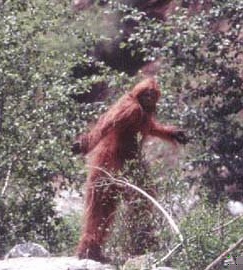
5. In view of these observations, it is difficult to take seriously claims that TAS is actually some tall guy in a gorilla costume. Even today there is no maker of fake/synthetic fur, or of animal costumes, who can reproduce something this realistic, nor are there any suits which look so realistic, which allow the mimicry of moving musculature and breasts, and which are anatomically accurate compared to living primates. Two serious attempts have been made to reproduce the film using a man in a specially designed suit: one for the BBC TV series ‘The X Creatures’ [image at left]; the second for Kal Korff’s documentary ‘The Making of Bigfoot’. In both instances the resulting attempt to discredit the Patterson-Gimlin film backfired: their results look like a man in a monkey suit, and in no way come even close to resembling TAS in the 1967 Patterson-Gimlin film. Several special effects experts have been consulted on how possible it might be to reproduce what’s seen in the footage (this is particularly relevant as there have been repeated claims that someone in the Hollywood special effects community manufactured a suit for Patterson), including John Chambers [designer of the ape costumes seen in ‘Planet of the Apes’]. While some have claimed that the construction of a suit matching what’s seen in the Patterson film would be easy or possible, I am troubled by the fact that no-one has yet replicated it. At least some special effects people have stated that the creature seen in the footage exceeds in accuracy and realism the special effects available to workshops today, let alone those existing in 1967.

There’s a lot more that could be said on this subject, but I’ll leave it at that. I have not discussed Roger Patterson’s personal circumstances (relevant to claims that he faked the footage for money or fame), nor have I touched on the interesting story of what a farce Patterson and Gimlin’s eventual development and treatment of the film was. As Richard Greenwell (1942-2005) – former secretary of the International Society of Cryptozoology – said to me in a letter of March 2000: ‘In the big picture it matters little if Bigfoot exists or not; what matters is that proper procedure be followed in examining such evidence – or any evidence’.

UPDATE (29-11-2006): Loren Coleman has written a blog post about this one - see Napier, Naish, and Frame 352. For the latest news on Tetrapod Zoology please go here.

Refs - -

Bayanov, D. 1997. America’s Bigfoot: Fact, Not Fiction. Crypto Logos, Moscow.

Daegling, D. J. & Schmitt, D. O. 1999. Bigfoot’s screen test. Skeptical Inquirer May/June 1999, 20-25.

Coleman, L. 2003. Bigfoot! The True Story of Apes in America. Paraview Pocket Books, New York.

Krantz, G. S. 1999. Bigfoot Sasquatch Evidence. Hancock House, Surrey, B.C. & Blaine, WA.

Murphy, C. L., Green, J. & Steenburg, T. 2004. Meet the Sasquatch. Hancock House, Surrey, B.C. & Blaine, WA.

Napier, J. 1974. Bigfoot. Readers Union, Newton Abbot.

Perez, D. 2004. In defence of the Patterson-Gimlin film. Fortean Times 192, 36-37.

Vella, P. 2004. J’accuse. Animals & Men 34, 42-48.

Labels: , ,

Saturday, September 02, 2006

Cadborosaurus and the Naden Harbour carcass: extant Mesozoic marine reptiles, or just bad bad science?

A recent meeting with Charles Paxton, a fisheries ecologist based at the Centre for Research into Ecological and Environmental Modelling at the University of St. Andrews, inspired me to think more about sea serpents [though note that I personally prefer the less loaded term ‘marine cryptid’*]. Charles is one of the few qualified scientists in the world publishing peer-reviewed papers on marine cryptids (Paxton 1998, 2004, Paxton & Holland 2005, Paxton et al. 2005), and while many technical zoologists have expressed an interest in this subject, Charles is pretty much the only one right now who is involved in detailed, empirical work on the subject. As usual, it’s funny how things pan out. For entirely unrelated reasons I’ve been writing about marine cryptids lately (more on that in future), plus I recently found myself writing about oarfishes and sea serpents in response to a post Reid Farmer put up on Steve Bodio’s Querencia blog (go here). During the week I was alerted to new Russian photos allegedly showing a marine cryptid carcass: alas, it is clear from the photos that the carcass is that of a Beluga Delphinapterus leucas.

* Cryptids are animals reported from anecdotal evidence and as yet unknown from museum-accessioned specimens.

While it might seem naïve or daft to think that aquatic cryptids, or sea serpents or whatever, really exist, there are actually reasonably good reasons to think that they do. Firstly, there is little doubt among scientists – I’d like to say ‘no doubt’ but that might be pushing it a bit too far – that large vertebrate species await discovery. By plotting species discovery rates over time to generate a species discovery curve, Paxton (1998) found that as many as 47 large open-water marine animals still await discovery, and new data caused him to up the figure to 51 a few years later (Paxton 2001). New study predicts a lower number (Paxton, pers. comm. 2006), though one that’s still surprisingly high. Raynal (2001) applied the same technique to cetacean discovery rates, and in this case the data suggested that 15 cetacean species await discovery. Solow & Smith (2005) also looked at this issue and concluded that about 10 large marine animal species await discovery, though they also found good statistical support for the possible presence of as many as 16 undiscovered species.

Secondly, such discoveries are not a hypothetical future event, but occur regularly, right here, right now. Megamouth shark Megachasma pelagios, discovered in the Pacific in 1976 and named in 1983*; Bandolero beaked whale (aka Peruvian or Lesser beaked whale) Mesoplodon peruvianus, known from specimens discovered 1975-1989, named as a new species in 1991; Spade-toothed whale M. traversii, named in 1874 but later sunk into synonymy: resurrected in 2002 when found to be synonymous with M. bahamondi (a supposedly new species named in 1995); Perrin’s beaked whale M. perrini known from specimens discovered 1975-1997 and named as a new species in 2002; Indonesian coelacanth Latimera menadoensis, discovered in 1997 and named in 1998; Omura’s whale Balaenoptera omurai, first collected in late 1970s and named in 2003; Australian snubfin dolphin Orcaella heinsohni, named in 2005.

* Megamouth sharks were discovered in the Atlantic in 1995, and the 2004 discovery of a morphologically unusual specimen in Sumatra has led to the suggestion that a second species might await recognition (White et al. 2004).

Thirdly, the eyewitness evidence for marine cryptids is pretty good, in some cases being consistent across accounts and reported by trained observers who had a reputation to protect. They include military personnel and experienced naturalists. I could write thousands of words on such cases, so will hold off and only mention one: the Valhalla incident of 1905. Aboard the Valhalla were E. Maede-Waldo and Michael Nicoll, and it was while off the Brazilian coast that they were able to observe an unidentified long-necked, tall-finned marine creature through binoculars. Later written up and published in the technical literature (Maede-Waldo & Nicoll 1906), it is one of the best marine cryptid reports, clearly describes an unknown animal, and was made by scientists who went on to make names for themselves in the zoological world. Note that the existence of marine cryptids has been taken seriously, or even supported, by some pretty influential individuals, among them Thomas Huxley, D’Arcy Thompson, William Pycraft, J. L. B. Smith, Maurice Burton, Gavin Maxwell, Denys Tucker and Robert Menzies.

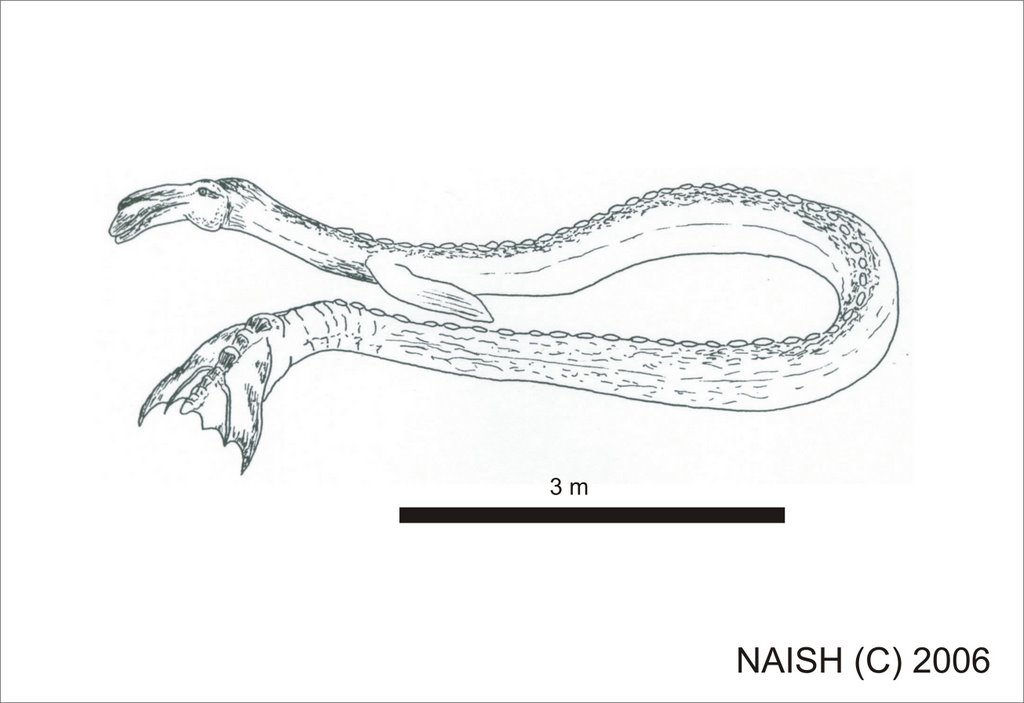
Of those marine cryptids that have attracted academic attention, perhaps the best known is that popularly dubbed ‘Caddy’ or ‘Cadborosaurus’, an enigmatic serpentine animal reported from the waters around the coasts of British Columbia. Named after Cadboro Bay, a sightings hotspot, Caddy sightings are impressively consistent, with most reports mentioning a large-eyed, horse-like or camel-like head (often with short horns), a long neck, serpentine body, a pair of flippers and a bifid, horizontal tail (LeBlond & Bousfield 1995). It is large, with estimated lengths ranging from 5 to 15 m. The animal’s body is often reported to sport brownish hair, and a serrated ridge is sometimes said to be present along the dorsal surface. Caddy has been described apparently pursuing and catching fish, and several accounts describe the animal snapping at, and even catching and eating, seabirds. It seems difficult to explain all of the sightings away as of misidentified cetaceans, elephant seals or large fish, and for now the identity of this creature remains a valid zoological mystery.

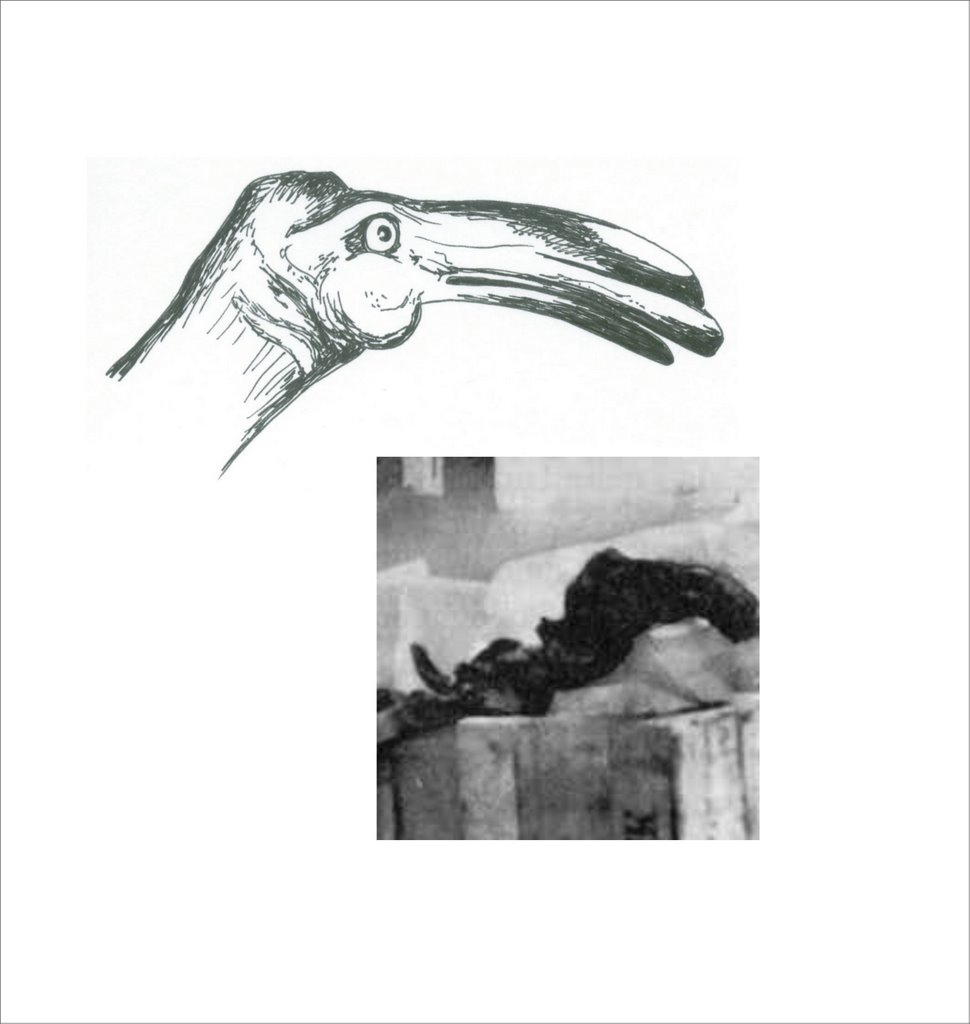
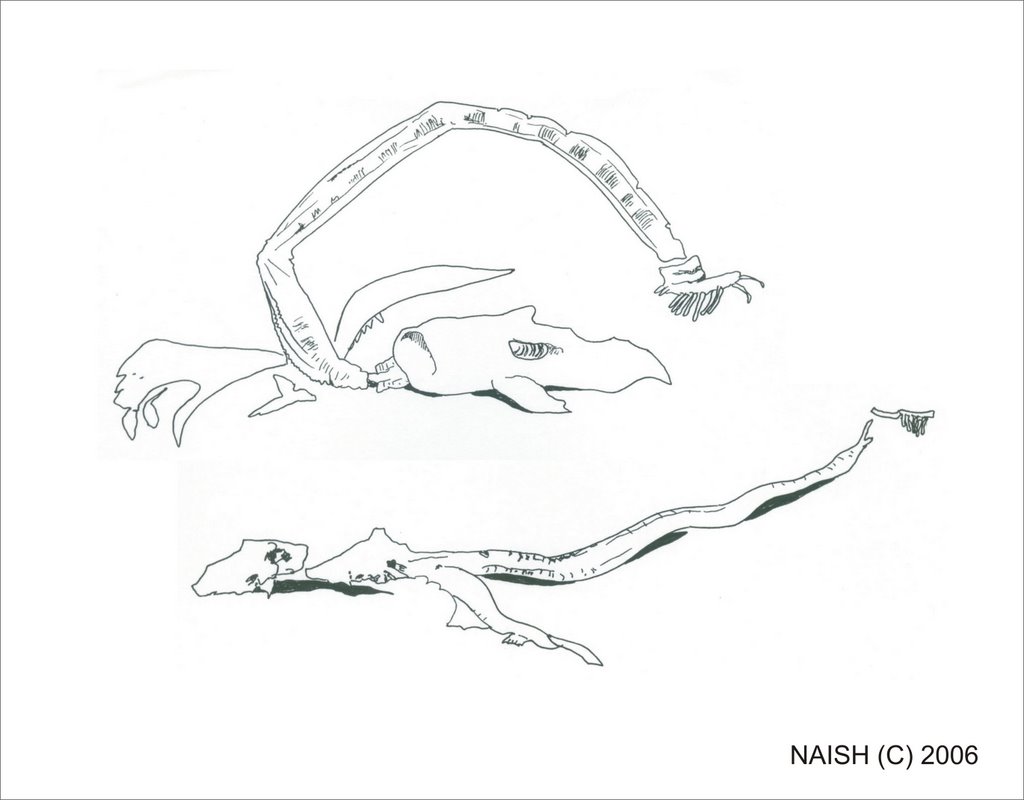
In 1992 Ed Bousfield, retired Research Associate at the Royal Ontario Museum, Toronto, and the Royal British Columbia Museum in Victoria, and Paul LeBlond, professor at the Department of Oceanography, University of British Columbia (Vancouver), announced some startling pieces of evidence - three photos, taken in 1937 on the flensing platform of a whaling station at Naden Harbour in the Queen Charlotte Islands, that depict a large serpentine carcass. Retrieved from the stomach of a sperm whale Physeter macrocephalus, the carcass is about 3 m long, long-bodied, and appears to have a camel-like head and a fluked tail. It obviously struck the whalers as unusual, otherwise they wouldn’t have gone to the trouble of setting it up on crates or photographing it. Suggestions that it is an elephant seal or baleen whale don’t seem realistic in view of certain of its features. These include an apparently symmetrical caudal fluke-like distal structure with a central series of knobs that appear to correspond to vertebrae (see close-up of photo and adjacent interpretative drawing below), and a camel-like ‘head’. The ‘body’ is elongate and serpentine and there appear to be pectoral flippers. While parts of the carcass were apparently retained and forwarded to the Pacific Biological Station at Nanaimo and/or the Royal British Columbia Museum, Victoria, no material remains today and the specimen is regarded as lost to science (Bousfield & LeBlond 1995, p. 9).

By combining observations on this carcass with eyewitness reports, Bousfield and LeBlond formally described Caddy as a new species, Cadborosaurus willsi and in 1995 devoted Supplement 1 of the new journal Amphipacifica to their paper on this taxon (Bousfield & LeBlond 1995). One of the Naden Harbour photographs was selected as the holotype of the ostensible new species. Bousfield and LeBlond proposed that Cadborosaurus might represent a surviving plesiosaur (on p. 8 it is classified as ‘Class Reptilia, Subclass Euryapsida?, Order Plesiosauria?’) and made speculations about its lifestyle, style of locomotion, feeding behaviour, and even its breeding behaviour and physiology (see Bousfield & LeBlond 1992, Park 1993 and Dash 1993 for earlier speculations).

As mentioned above, while the number and quality of Caddy eyewitness accounts suggests that there may indeed be a new species awaiting discovery in the region, Bousfield and LeBlond’s proposal that the creature might be a living plesiosaur, and that such a species can be officially described and diagnosed based only on controversial photographic data, is highly problematical. Indeed an editorial that accompanied the publication of the Cadborosaurus description decried the lack of restraint employed by Bousfield and LeBlond, and strongly disagreed with the naming of the new species (Staude & Lambert 1995). These authors also noted that ‘Certainly it would have been preferable for [Bousfield and LeBlond] to publish in an independent journal, where neither served on the editorial board’ (p. 2). Aaron Bauer and Anthony Russell (1996) published a detailed critique of Bousfield and LeBlond’s paper, and I independently arrived at similar criticisms myself. The problems with Bousfield and LeBlond’s Cadborosaurus description can be grouped into three main areas.

1. How not to name a new species

Firstly, establishing a new species on the basis of a photo is just not acceptable: article 72(c)(v) of the International Code of Zoological Nomenclature states that the actual specimen figured or described, and not the illustration or description, must serve as the holotype. The name Cadborosaurus willsi, based on a photograph and not the specimen it depicts, therefore has no official standing and should be ignored. There are lots of other species names that have been coined in the cryptozoological literature in the absence of holotype specimens, and all are similarly nomina nuda that have no useful status. They include not only marine cryptids and relict hominids, but the Vietnamese snake Cryptophidion annamense, described from photos by Wallach and Jones (1992).

2. An erroneous identification

As discussed at depth in their book (LeBlond & Bousfield 1995), Bousfield and LeBlond favoured a reptilian identity for Cadborosaurus. Predominantly this is because they concluded that – in view of its elongate shape and occurrence in cold waters – Caddy must be poikilothermic. Jointed elements in the Naden Harbour specimen’s ‘tail pseudo-fluke’ (their term) were interpreted by Bousfield and LeBlond as being homologous with the hindlimb elements of Mesozoic marine reptiles, and they pointed in particular to a close similarity with the hindlimb of a pachypleurosaur (pachypleurosaurs are Triassic members of Sauropterygia, the reptile clade that includes plesiosaurs). Actually, while their figure (fig. 13C) definitely depicts the hindlimb of a pachypleurosaur, they identified it in their figure caption as the hindlimb of the plesiosaur Cryptoclidus. Furthermore, they mis-labelled most of the bones, identifying the tibia as the fibula, digit I as digit V and so on. [The image above shows a close-up of the carcass's 'head' together with an interpretative drawing, based on that provided by Bousfield & LeBlond (1995).]

The point of figuring a sauropterygian hindlimb was to show how the skeletal structure of the sauropterygian limb resembled the inferred bony structure of the Naden Harbour ‘tail pseudo-fluke’. However, this ignores the fact that all tetrapods have the same elements in their hindlimbs as do sauropterygians, so the case for interpreting Cadborosaurus as a possible extant sauropterygian lacks supporting evidence. Whatever its true morphological homology, it has to be said that the ‘tail’ of the Naden Harbour carcass is pretty odd – it does look as if there is a series of vertebrae, adjacent to which is a soft-tissue fin of some kind, but it is stretching things too far to assume, as Bousfield & LeBlond (1995) did, that the soft-tissue fin was originally one of a pair of modified hindlimbs.

3. Inappropriate speculation, disturbing naivety

Overall, the Cadborosaurus description lacks the sort of academic rigour and restraint that is normal for taxonomic descriptions, so rather than bringing academic respectability to the study of Caddy it achieved just the opposite. With all due respect, Bousfield and LeBlond clearly did not do their homework when it came to some critical areas. If you are to seriously attempt to discuss the biology and morphology of any group of organisms in the academic literature, you must yourself consult the appropriate technical work that has previously been published: it is far from wise to rely on popular articles in magazines and encyclopaedic reference works written for laypeople. In their discussion of sauropterygians and basilosaurid cetaceans, for example, Bousfield and LeBlond cited popular and semi-popular works as their most authoritative references and apparently did not consult any of the technical literature on these subjects. Bauer & Russell (1996) noted that some of the terminology used by Bousfield and LeBlond implied ‘unfamiliarity with the literature’, and it’s telling that Bousfield and LeBlond referred to the archaic cetaceans Basilosaurus and Zeuglodon as if they were different, related genera, whereas in fact it has been widely acknowledged since the 1870s as least that Zeuglodon Owen is a junior synonym of the former.

Also, one cannot seriously begin to write about plesiosaurs without consulting and citing articles produced by such workers as Welles, Riess, Massare, Cruickshank, Taylor, Brown, Bardet and Storrs: authors who have provided a wealth of functional, behavioural, taxonomical and morphological literature, much of which (e.g., hydrodynamics, ecology and feeding behaviours) would have been very pertinent to Bousfield and LeBlond’s speculations. Maybe if they had understood more of plesiosaur anatomy and functional morphology they would have sensibly reconsidered their proposal that Cadborosaurus was a possible plesiosaur descendant. It is actually very difficult to imagine a tetrapod MORE unlike a plesiosaur than is Cadborosaurus.

And having mentioned speculations, it has to be said that the number of speculations that Bousfield and LeBlond included within the paper are inappropriate for a work masquerading as a technical description, never mind the fact that those speculations were fantastic and logically flawed. It was proposed, for example, that the hair reported on Caddy might have a respiratory function (analogous to the hair-like growths seen on the frog Trichobatrachus), that the serpentine Cadborosaurus might somehow form a tuna-like body shape by bunching up the coils of its long body, that Caddy is viviparous and gives birth to large precocial babies, and that Caddy might be able to employ echolocation (Bousfield & LeBlond 1995). If these proposals sound nonsensical, or just extremely speculative and lacking in justification, that’s because they are.

So what now?

For me, the story of the Naden Harbour carcass has been a fascinating tale of discovery and interpretation, and I certainly agree with Bousfield and LeBlond that the subject is deserving of attention and study, as are Caddy reports in general. But I regret the way in which the whole issue was dealt with, and I wish that improved scientific rigour, restraint, and a far more cautious approach to description and identification, had been adopted. In fact a technical publication on the specimen seems entirely appropriate, but not one that includes the speculation that Bousfield and LeBlond indulged in, nor one that names an ostensible new species based on photographs.

If the Naden Harbour specimen is a real animal, and if it belongs to the same species as the cryptid seen in British Columbian waters, then it’s a big deal. But how sure are we of this? While the Naden Harbour specimen looks like a highly unusual, apparently new type of vertebrate animal, the possibility that it represents the mangled remains of a known animal remain to be eliminated. Bauer & Russell (1996) suggested that the carcass might have been that of a Basking shark, the rotting corpses of which are known to take on a bizarre pseudo-plesiosaur appearance after losing the gill arches, much of the tail, and other parts of the body. Similarly, Ben Speers-Roesch also argued (albeit not in print) that the carcass might be that of a Basking shark: he noted that various detailed structures seen on the body segments of the Naden Harbour carcass strongly resemble features present on Basking shark vertebrae. This is an intriguing idea that requires further consideration – if these workers are right then the similarity that the carcass has with Caddy eyewitness reports is of course coincidental.

It’s also interesting that photos of an alleged ‘carcass’ very much like those taken at Naden Harbour were published as postcards in the 1930s (see adjacent interpretative drawings). Taken on the beach at Camp Fircom, British Columbia, examination led me to conclude that they do not represent an animal carcass of any kind, but are in fact composed of a montage of beach debris. A stem of kelp serves as a body and a large white rock (with a mussel shell as an eye) poses as a skull (Naish 1997). I would like to emphasise however that the Camp Fircom specimen is nothing to do with the Naden Harbour carcass. Having said that though, some people in the 1930s were clearly in the habit of manufacturing fake ‘Caddy’ carcasses, so we have to consider the idea that the Naden Harbour carcass might also have been a product of this episode of trickery. This possibility has to be discounted before it can be assumed that the thing represents an animal. And here the story ends.

Finally, below is an excerpt from an article by Francois de Sarre and Michel Granger that mentions both Cadborosaurus and yours truly. The article was called Le serpent de mer existe bien! and appeared in Le Courrier of December 15th 1996. I don’t recall saying what they seem to be saying I said (…. if that makes sense).

----------------------------------------------------------------------------------------

Serpent de terre

En 1991, un cadborosaurus fut même signalé par des témoins dignes de foi près de Saanich Inlet comme ‘évoluant sur la terre ferme’.

Ce qui semblerait accréditer la filiation heuvelmansienne ‘mammalienne’ (issue du phoque ou du cétacé) plutôt que celle voulant voir un descendant du fameux plésiosaure peu enclin à s’aventurer sur le sol.

L’absence systématique de queue appuie aussi cette descendance pinnipède, meme s’il est difficile d’imputer à une otarie la légende du serpent de mer.

Elle conviendrait beaucoup mieux, cepen-dant, pour décrire certains monstres de lacs tel Nessie, le célèbre monstre du Loch Ness.

Et pourrait fournir, par un processus de déplacement ‘à nageoires sèches’, le passage dans le lack Okanagan, toujours en Colombie Brittanique, du monstre de Ogopogo.

Quand la nuit ou l’obscurité se fait à la tombée du jour, vous voyez une bête d’une vingtaine de mètres de long qui ondule à travers la campagne à la façon d’une chenille, raconte-t-on dans la région.

Un descendant des baleines?

Cette possibilité n’est pas exclue par le cryptozoologue brittanique Darren Naish quie met la description d’anneaux décollés de l’eau sur le compte de l’imagination des témoins. Mais, à notre avis, la question ne pourra être tranchée tant que d’autres éléments ne seront pas ajoutés au dossier du ‘monstre’. Par exemple, il n’est pas impossible qu’un filet de pêcheur résolve un jour l’énigme si ce n’est déjà fait. Les biologistes marins canadiens affi-chent un très bel optimsme dans ce sens. A quand un Cadborosaurus nageant dans un Marineland? Le fait d’envoyer un petit bathyscaphe dans la baie de Cadboro pour filmer la bête dans son milieu naturel pourrait bein aboutir comme ce fut le cas aux Commores pour les coleacanthe.

Les sceptiques n’ont qu’à bien se tenir. Pour notre part, nous pouvons affirmer: le légendaire serpent de mer existe bel et bein...

----------------------------------------------------------------------------------------

For previous blog posts on marine cryptids see Swan-necked seals and Gambo rides again. And for the latest news on Tetrapod Zoology please go here.

Refs - -

Bauer, A. M. & Russell, A. P. 1996. A living plesiosaur?: a critical assessment of the description of Cadborosaurus willsi. Cryptozoology 12, 1-18.

Bousfield, E. L. & LeBlond, P. H. 1992. Preliminary studies on the biology of a large marine cryptid in coastal waters of British Columbia. American Zoologist 32 (abstracts): 2A.

- . & LeBlond, P. H. 1995. An account of Cadborosaurus willsi, new genus, new species, a large aquatic reptile from the Pacific coast of North America. Amphipacifica 1 (Supplement 1), 3-25.

Dash, M. 1993. The dragons of Vancouver. Fortean Times 70, 46-48.

LeBlond, P. H. & Bousfield, E. L. 1995. Cadborosaurus: Survivor from the Deep. Horsdal and Schubart Publishers (Victoria, B.C.).

Maede-Waldo, E. G. B. & Nicoll, M. J. 1906. Description of an unknown animal seen at sea off the coast of Brazil. Proceedings of the Zoological Society of London 2 (1906), 719-721.

Naish, D. 1997. Another Caddy carcass? The Cryptozoology Review 2 (1), 26-29.

Park, P. 1993. Beast from the deep puzzles zoologists. New Scientist 137 (1857), 16.

Paxton, C. G. M. 1998. A cumulative species description curve for large open water marine animals. Journal of the Marine Biologists Association, U.K. 78, 1389-1391.

- . 2001. Predicting pelagic peculiarities: some thoughts on future discoveries in the open seas. In Heinselman, C. (ed) Dracontology Special Number 1: Being an Examination of Unknown Aquatic Animals. Craig Heinselman (Francestown, New Hampshire), pp. 60-65.

- . 2004. Giant squids are red herrings: why Architeuthis is an unlikely source of sea monster sightings. The Cryptozoology Review 4 (2), 10-16.

- . & Holland, R. 2005. Was Steenstrup right? A new interpretation of the 16th century sea monk of the Øresund. Steenstrupia 28, 39-47.

- ., Knatterud, E. & Hedley, S. L. 2004. Cetaceans, sex and sea serpents: an analysis of the Egede accounts of a “most dreadful monster” seen off the coast of Greenland in 1734. Archives of Natural History 32, 1-9.

Raynal, M. 2001. Cryptocetology and mathematics: how many cetaceans remain to be discovered? In Heinselman, C. (ed) Dracontology Special Number 1: Being an Examination of Unknown Aquatic Animals. Craig Heinselman (Francestown, New Hampshire), pp. 75-90.

Solow, A. R. & Smith, W. K. 2005. On estimating the number of species from the discovery record. Proceedings of the Royal Society B 272, 285-287.

Staude, C. P. & Lambert, P. 1995. Editorial… an opposing view. Amphipacifica 1 (Supp. 1), 2.

Wallach, V. and Jones, G. S. 1992. Cryptophidion annamense, a new genus and species of cryptozoic snake from Vietnam (Reptilia: Serpentes). Cryptozoology 11, 1-37.

White, W. T., Muhammad Adrim, F. & Sumadhiharga, K. 2004. A juvenile megamouth shark Megachasma pelagios (Lamniformes: Megachasmidae) from northern Sumatra, Indonesia. The Raffles Bulletin of Zoology 52, 603-607.

Labels: , ,

Friday, July 21, 2006

Meet peccary # 4

Having spent the better part of the day tidying up the house for the garden party we’re having tomorrow (yet again a celebration of my graduation: will this decadence ever end?), I thought I should try and finish one of the blog posts I said I would write. You know, the one on peccaries [first promised in More on what I saw at the zoo].

Peccaries are predominantly herbivorous, pig-like artiodactyls, restricted today entirely to the Americas, and for reasons that I’ll get to in a minute EVERYONE should be talking about them right now. Living species range in weight from 15-40 kg. They are highly social, living in mixed-sex herds of just a few individuals to several hundred, and females produce just one or two precocial babies that follow the mother soon after birth. Peccaries make an interesting assortment of noises: Collared peccaries Tayassu tajacu produce loud, dog-like barks, and White-lipped peccaries T. pecari scream, bellow and retch when in large groups (small groups tend to be quiet). All species make loud tooth-clacking noises, especially when disturbed.

Peccaries are ecologically flexible, with the three [cough cough] living species being distributed across rainforest, parkland, scrubland, steppe and even desert, and with Collared peccaries in fact occupying all of these habitats. Habits differ according to habitat: rainforest Collared peccaries are diurnal, eat fruit, palm nuts and shrubs, and sleep in burrows, while desert populations are nocturnal, eat mostly cacti, and don’t use burrows. This flexibility is reflecting in their variable tooth anatomy. Judging from fossils the primitive tooth type for peccaries is bunodonty (viz, where each tooth sports multiple low rounded mound-like cusps), but zygodonty (viz, where mound-like cusps are connected by transverse crests) evolved several times. Among living species, the bunodont White-lipped peccary mostly eats nuts while the zygodont Chacoan peccary Catagonus wagneri mostly eats cacti. The Collared peccary includes both bunodont and zygodont individuals across its range, and it seems that desert populations are more zygodont while populations from wetter places tend to be bunodont (Wright 1998). Peccaries are reported to occasionally eat carrion, and they will also eat snails and other invertebrates as well as small vertebrates.

The Collared peccary or Javelina Tayassu tajacu (or Pecari tajacu or Dicotyles tajacu) is the best studied species and is the archetypal peccary, occurring from central Arizona and central Texas south to northern Argentina (though with introduced populations in northern Texas, southern Oklahoma and Cuba). Its nomenclature is a bit confused: some authors use the generic name Dicotyles G. Cuvier, 1817 or Pecari Reichenbach, 1835 for it, but most common is its inclusion within Tayassu Fischer, 1814. Pecari is apparently an objective synonym of Dicotyles and thus not available, and use of Dicotyles therefore depends on whether or not you consider this species distinct enough from the White-lipped peccary to warrant separation. Indeed this confusion is related to a similar controversy over which formal name is used for peccaries: are they Tayassuidae Palmer, 1897 or Dicotylidae Gray, 1868? A few artiodactyl specialists make a point of using the latter name, but the former is more widely used and would easily win in a fight.

Collared peccaries release an odour like cheese or chicken soup, apparently (Emmons 1997). In fact a vernacular name for them in parts of the USA is musk hog, and you are said to smell them before you see them.

The White-lipped peccary, a species that ranges from southern Mexico to Argentina (and has also been introduced to Cuba), is substantially bigger than the Collared peccary. Mostly an animal of forests, it is semi-nomadic. The third species, the Chacoan peccary, Roman-nosed peccary or Tagua, is particularly notable in being both relatively recently discovered in living state, and for being initially named from fossils. I mentioned it before in a post on rodents (New, obscure, and nearly extinct rodents of South America.... and when fossils come alive). The species’ scientific history began in 1930 when, in his lengthy paper on Argentinian fossil peccaries, C. Rusconi named the new subspecies Platygonus carlesi wagneri. By 1948 Rusconi had decided that this form was distinct enough for its own species, P. wagneri.

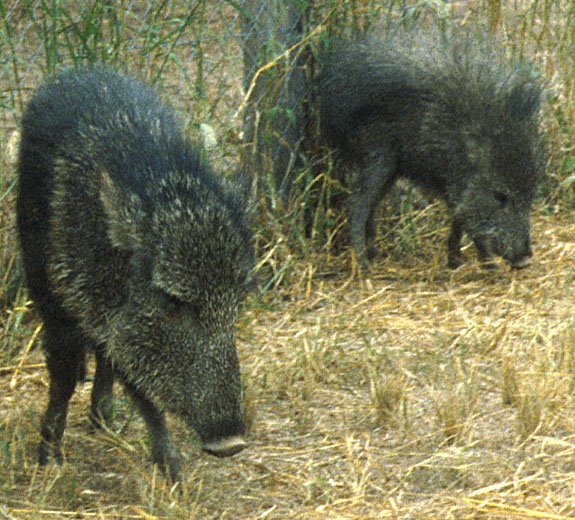
The story then moves on to 1972 when, while working on a mammal inventory project in the semiarid thorn forest and steppe of the Gran Chaco area of Argentina, Paraguay and Bolivia, Ralph Wetzel and colleagues were surprised to hear from local people of a large peccary – distinct from the Collared and White-lipped – known to them as the tagua, pagua or curé-buro (meaning donkey-pig). Their enquiries eventually led to the successful procurement of tagua skulls, and they clearly represented a third, modern-day peccary species. Yet again we see a case where good, honest, card-carrying zoologists track down an ethnoknown animal with successful results, or in other words an unarguable example of cryptozoological investigation being carried out by people who don’t consider themselves cryptozoologists (for other examples see At last: the Odedi revealed and The interesting and contentious discovery of the kipunji). Rather than being new, it now turned out that the tagua was the same thing as Rusconi’s fossil species Platygonus wagneri: it really was a ‘fossil come to life’. But rather than being a member of Platygonus, a genus known from the Miocene, Pliocene and Pleistocene of both North and South America, Wetzel concluded that the species was instead better classified within Catagonus, a genus first named by Florentino Ameghino in 1904 for Pleistocene Argentinian fossils (Wetzel 1977a, b, Wetzel et al. 1975) [The adjacent picture shows two captive Chacoan peccaries, borrowed from the Florida Museum of Natural History site. The individual at the rear is scent-marking a fence post with its tail gland].

The Chacoan peccary is specialised for life in semiarid forests and steppes. It browses on ground cacti, is reported to not drink, and is superior in cursorial ability compared to other living species. Its teeth are particularly tall-crowned and it only has two hind toes, not three like other living peccaries. Reports from hunters suggest that it occurs in several parts of Bolivia where its presence has yet to be verified (Mayer & Wetzel 1986) and it turns out that its fur was being used in the manufacture of New York coats and hats long prior to 1972.

But here’s the big news. While the 1975 discovery of the Chacoan peccary was a major zoological discovery – indeed one of the most significant mammalogical discoveries of the 20th century – it seems that history is repeating itself, for there is now a fourth living peccary species: the Giant peccary. As in the case of the Chacoan peccary, this new species appears to have been discovered by listening to local people: in this case the Caboclos people (descendants of rubber collectors) of the Brazilian Amazon. And the discover is Marc van Roosmalen, the Dutch primatologist well known for the many new species of primate he has discovered (about 20) within recent years.

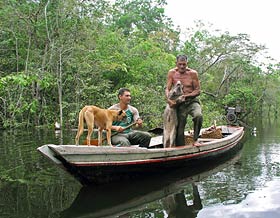
After learning of the fabled new peccary, apparently larger than the documented species, van Roosmalen set off with GEO magazine author and film maker Lothar Frenz and two photographers. And after four days of waiting in a hide they were rewarded with views of a group of four of the animals. Good photos were obtained, and one is reproduced here (at top). The animals look distinct from the other living peccaries – they’re most like Collared peccaries but larger and without the collar, and they’re reported to be even bigger than Chacoan peccaries, hence the name Giant peccary.

German newspapers first reported the successful observation of live Giant peccaries in June 2004, and the news was apparently held back in order to coincide its release with the airing of Frenz’s documentary on the expedition. So far as I can tell however, Karl Shuker was first to break the news as he mentioned it in his 2002 book The New Zoo. Citing personal communication from van Roosmalen, Shuker implied that the Giant peccary had first been encountered in January 2000 (Shuker 2002). It also seems that van Roosmalen and Frenz observed the successful capture and killing of one of the animals: an article in Suiform Soundings* entitled ‘New mammal discovered in South America – and eaten’ (Anon. 2004) stated that ‘Frenz said he and van Roosmalen abstained from trying the meat, but collected some of the remains for a genetic study’. The GEO article includes a photo of hunters with a dead Giant peccary (image below), so maybe this is the same individual that Frenz and van Roosmalen watched being eaten.

* The newsletter of the IUCN/SSC Pigs, Peccaries, and Hippos Specialist Group. Formerly Asian Wild Pig News.

GEO magazine published an article (in German) on the discovery in 2004 (the online version is here), and in December 2005 Suiform Soundings published an English version (Carstens 2005). I don’t know if van Roosmalen is planning to publish a description based only on the meat sample he collected (species have been described from photos and tissue samples before, the best known case being that of the Bulo Burti boubou Laniarius liberatus), or if he’s waiting until better material is obtained, but it seems that we have here the valid discovery of a large, terrestrial mammal. That’s a big deal, though admittedly not as big a deal as so many people – zoologists included – still seem to think. Multiple new large mammals have been described in recent years, and there’s every reason to think that more such discoveries will occur in the future.

But, like I said, say hello to peccary number 4. More to come on peccaries soon. For the latest news on Tetrapod Zoology do go here.

Refs - -

Anon. 2004. New mammal discovered in South America – and eaten. Suiform Soundings 4 (2), 66.

Carstens, P. 2005. Scientist find [sic] new species of large mammal. Suiform Soundings 5 (2), 38-39.

Emmons, L. H. 1999. Neotropical Rainforest Mammals: A Field Guide (Second Edition). University of Chicago Press (Chicago & London).

Mayer, J. J. & Wetzel, R. M. 1986. Catagonus wagneri. Mammalian Species 259, 1-5.

Shuker, K. P. N. 2002. The New Zoo. House of Stratus (Thirsk, North Yorkshire).

Wetzel, R. M. 1977a. The extinction of peccaries and a new case of survival. Annals of the New York Academy of Science 288, 538-544.

- . 1977b. The Chacoan peccary, Catagonus wagneri (Rusconi). Bulletin of the Carnegie Museum of Natural History 3, 1-36.

- ., Dubos, R. E., Martin, R. L. & Myers, P. 1975. Catagonus, an ‘extinct’ peccary alive in Paraguay. Science 189, 379-381.

Wright, D. B. 1998. Tayassuidae. In Janis, C. M., Scott, K. M. & Jacobs, L. L. (eds) Evolution of Tertiary Mammals of North America. Volume 1: Terrestrial Carnivores, Ungulates, and Ungulatelike Mammals. Cambridge University Press, pp. 389-401.

Labels: , ,

Friday, June 09, 2006

The kipunji, and new light on the evolution of drills, mandrills and baboons


In the previous post I discussed the Highland mangabey Lophocebus kipunji, a new monkey whose discovery is an interesting and controversial story. Though initially described only from photos, and not from a museum-accessioned specimen, a sub-adult male was found dead in a trap in August 2005, and is currently accessioned at the Field Museum of Natural History, Chicago. Study of its DNA sequence data has provided new information on the affinities and evolution of the Highland mangabey, and on mangabeys and their relatives as a whole, and this is what we’re going to look at here.

Mangabeys are an entirely African assemblage of cercopithecid monkeys, traditionally grouped together in the genus Cercocebus Geoffroy Saint-Hilaire, 1812. They’re all superficially alike, being long-tailed and long-limbed, and with moderately long muzzles and large incisors. However, molecular studies have consistently found mangabeys to be diphyletic, with the six terrestrial mangabey species forming a clade with drills and mandrills (and with macaques too in some studies), and the two arboreal mangabeys forming a clade with baboons and geladas.

The two kinds of mangabeys also differ from one another in many morphological details. Consequently, it has been widely agreed that the two arboreal species should be split from Cercocebus and given their own genus, Lophocebus (originally coined by Palmer in 1903 to replace Semnocebus Gray, 1870. The latter needed replacing as it was preoccupied by Semnocebus Lesson, 1840, a name now regarded as a junior synonym of Avahi Jourdan, 1834). I like Jonathan Kingdon’s use of the term ‘drill-mangabey’ for the terrestrial Cercocebus species, and of ‘baboon-mangabey’ for the arboreal Lophocebus species, and I’ll use them from hereon. Incidentally, drill-mangabeys are sometimes called eyelid monkeys because of their white upper eyelids, and baboon-mangabeys are sometimes called black mangabeys, for the obvious reason. This division of the mangabeys has been mostly accepted by mammalogists, but not universally so (McKenna & Bell 1997 still treat all mangabeys as the single genus Cercocebus, for example).

If correct, this diphyletic take on mangabey affinities would mean that geladas, baboons, drills and mandrills do not form a clade of ‘dog-faced cercopithecids’ as conventionally thought.

Apparently good morphological support for the non-monophyly of mangabeys came from Fleagle & McGraw’s (1999) study. They found that drill-mangabeys and drills and mandrills shared numerous features that aren’t present in baboon-mangabeys and baboons. In the humerus, drill-mangabeys, drills and mandrills share a notably broad deltoid plane, a proximally extended supinator crest, a broad flange for the brachialis, and a narrow olecranon process with a deep lateral ridge, and there are also characters in the radius and ulna that unite these monkeys to the exclusion of their close relatives. Drill-mangabeys, drills and mandrills are also united by particularly large, rounded posterior premolars, a robust ilium, a reduced gluteal tuberosity on the femur, sharp borders to the margins of the patellar groove, and other characters.

So that’s a pretty impressive list of characters, but note that they’re all associated with the terrestrial foraging style that these monkeys employ. Drill-mangabeys, drills and mandrills search manually through rotten wood and leaf litter, consuming hard nuts and seeds, and audibly cracking them with their large teeth. Furthermore, outgroup comparison (with macaques, for example) indicates that some of these characters are primitive for the cercopithecid clade that includes these species (Papionina). If we only had this morphological data, the possible monophyly of a drill-mangabey + drill/mandrill clade would be suspicious (Fleagle & McGraw 1999). But of course we don’t just have this morphological data, we also have the molecular data discussed above. So things are looking pretty robust.

And this is where the new data from that Chicago specimen of the Highland mangabey comes in. Its genetic sequences independently confirm the relationships indicated by previous molecular studies, and by Fleagle & McGraw’s morphological characters. Though initially described as a third species of baboon-mangabey (Jones et al. 2005), the Highland mangabey’s DNA show instead that it is closer to baboons that it is to baboon-mangabeys, yet it lacks the characters that unite all baboons proper. It therefore needs to be recognized as a new genus, and accordingly it’s now known as Rungwecebus kipunji Davenport et al., 2006. These authors proposed that members of Rungwecebus should now be referred to as kipunjis, and not as mangabeys anymore. Within Papionina, Rungwecebus and Papio form a clade, and the Rungwecebus + Papio clade forms a trichotomy with baboon-mangabeys and geladas. The sister-group to this kipunji/baboon/gelada/baboon-mangabey clade is the drill-mangabey + drill/mandrill clade (Davenport et al. 2006).

Given that we now have dog-faced monkeys variously scattered about a phylogenetic tree that also includes shorter-faced baboon-mangabeys, drill-mangabeys and the kipunji, you should now be wondering about the polarity and evolution of the long muzzle and large body size seen in mandrills, baboons and geladas. Is the long muzzle and large size primitive for this clade, or have these features evolved convergently two or even three times? At the moment, we can’t be sure: if the long muzzle evolved at the base of Papionina, three reversals to the short-snouted condition must have occurred, but if basal members of Papionina were short-snouted, you need either two or three independent acquisitions of the long-snouted condition. Neither scenario is clearly more parsimonious than the other.

Kingdon (1997) argued that the skull morphology of the drill-mangabeys indicates that they are dwarfed, short-faced descendants of large drill-like ancestors. Do fossils help? They might, as there are assorted fossil papionins, some of which (like Pliopapio) are long-snouted, others of which (like Parapapio) are relatively short-snouted (Frost 2001, Leakey et al. 2003). Unfortunately the phylogenetic affinities of these fossil taxa remain contentious.

What’s nice about this whole mangabey-kipunji-baboon subject is that it illustrates a point I’ve been planning to make for a while: namely, that fossils are sometimes all but useless in determining evolutionary relationships, and we most certainly don’t require them in order to uncover phylogenetic patterns. Contrary to what lay-people (and creationists) seem to think, you do not need fossils in order to uncover and reveal the reality of evolution, and even if fossils didn’t exist, scientific logic would lead us to conclude that organisms changed over time.

Don’t get me wrong, fossils are great (err, I am a palaeontologist if I remember correctly), and they can certainly elucidate and inform us about evolution and past diversity, but it’s living organisms, not dead ones, that provide the best evidence for evolutionary change.

I was hoping to cover in this post the rise and fall of the geladas, giant fossil baboons, swamp monkeys, talapoins, and the diversity of macaques. Another time I guess.

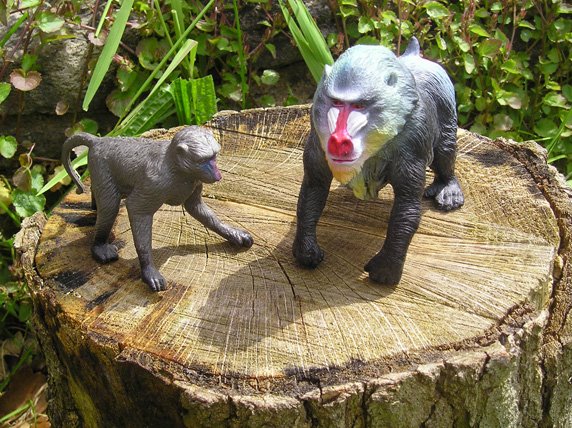
Sorry about the toys, it seemed like a good idea at the time. But how many zoologists do you know with both toy baboons and mandrills in their collection?

For the latest news on Tetrapod Zoology do go here.

Refs - -

Davenport, T. R. B., Stanley, W. T., Sargis, E. J., De Luca, D. W., Mpunga, N. E., Machaga, S. J. & Olson, L. E. 2006. A new genus of African monkey, Rungwecebus: morphology, ecology, and molecular phylogenetics. Sciencexpress 10.1126/science.1125631

Fleagle, J. G. & McGraw, W. S. 1999. Skeletal and dental morphology supports diphyletic origin of baboons and mandrills. Proceedings of the National Academy of Science 96, 1157-1161.

Frost, S. R. 2001. New early Pliocene Cercopithecidae (Mammalia: Primates) from Aramis, Middle Awash Valley, Ethiopia. American Museum Novitates 3350, 1-36.

Jones, T., Ehardt, C. L., Butynski, T. M., Davenport, T. R. B., Mpunga, N. E., Machaga, S. J. & De Luca, D. W. 2005. The Highland mangabey Lophocebus kipunji: a new species of African monkey. Science 308, 1161-1164.

Kingdon, J. 1997. The Kingdon Field Guide to African Mammals. Academic Press (San Diego), pp. 464.

Leakey, M. G., Teaford, M. F. & Ward, C. V. 2003. Cercopithecidae from Lothagam. In Leakey, M. G. & Harris, J. M. (eds) Lothagam: the Dawn of Humanity in Eastern Africa. Columbia University Press (New York), pp. 201-248.

McKenna, M. C. & Bell, S. K. 1997. Classification of Mammals: Above the Species Level. Columbia University Press, New York.

Labels: , ,

Tuesday, May 09, 2006

Mystery birds of the Falkland Islands

In a previous post I discussed the little-known case of the Odedi, a cryptic passerine from Bougainville Island in the SW Pacific: it had been heard many times before a specimen was finally procured and the species was officially recognised. If that sort of thing interests you, you might then be pleased to learn that there are actually quite a few little crypto-birds of this sort, mostly unknown to all but specialists.

Unidentified owls on the Mascarenes, the Andaman and Nicobar islands; a black, long-tailed passerine, notable for its startling rattle-like call, from Goodenough Island in the D’Entrecastaeux Archipelago; mystery African gallinules and touracos; a Kenyan long-tailed passerine with reddish undertail-coverts; an all-black Kenyan swift (Ali & Ripley 1969, Williams & Arlott 1980, Beehler 1991, Shuker 1998). There are others that are even less well reported: a brown, thrush-sized duck from St. Paul Island in the Indian Ocean (described by John Barrow in 1793); an unverified serin from Ethiopia, referred to in passing by Clement et al. (1993, p. 17); and… the mystery birds of the Falkland Islands.

The Falkland Islands and their native fauna

Recently I’ve been reading Robin W. Wood’s Guide to Birds of the Falkland Islands. It’s not just a field guide: Wood (an outstanding field ornithologist and collector of data*) included stacks of information on Falkland ecology, topography, and ornithological history. Consisting of 780 islands (only two of which – East Falkland and West Falkland – can be considered large), the Falklands are located about 500 km northeast of continental South America. There are some really strange landscape features: the stone-runs for example, which are accumulations of large, angular boulders arranged on the sides of hills and valleys, and there are no native trees (though many trees have of course been planted by human colonists).

* And also a psychologist, metereologist and ecologist by the way.

Mostly the islands are covered by what’s known as oceanic heath: an association of rushes, sedges and mosses that grows on peat layers up to 13 m thick. Tussac grass (or tussock grass, depending on your preference), up to 3.5 m tall, forms dense stands in coastal areas and acts as an important nesting place for petrels, shearwaters, penguins and others. Tussuc is highly sensitive to grazing by large herbivores (introduced cattle all but eradicated it on the larger islands) and, worldwide, tussac species only occur where native herbivorous mammals are rare or absent. Whether the islands were glaciated or not during the Pleistocene remains controversial (McDowall 2005).

As you might expect, there are no lissamphibians or non-avian reptiles native to the islands. There was a native land mammal: the Warrah or Antarctic wolf Dusicyon australis, sadly hunted to extinction by 1876. Darwin, who encountered these canids in 1833, famously described how tame and trusting they were. A single bat – a vagrant from Patagonia - has been recorded, and there is also an unverified mention of a small mouse (Day 1981). The avifauna of the islands is pretty good though, with about 36 resident species and 18 additional species recorded as vagrants. The residents are mostly birds of moorland, freshwater environments and shores.

Avian extinctions on the Falklands

It is widely stated in the literature that King penguins Aptenodytes patagonicus were made extinct on the Falklands some time around 1870 by the destruction of the last rookery by a shepherd. Apparently he boiled down the birds to use their oil to waterproof a roof, though some authors have doubted the veracity of this story (Simpson 1976). King penguins were thereafter absent from the islands for a while, but by the 1940s they were breeding there and today there are several large colonies.

Less well known is that several birds reported to be present on the islands during the 19th century are no longer there, and hence are assumed to have become locally extinct. Darwin reported or collected Cinereous harriers Circus cinereus, Andean tapaculos Scytalopus magellanicus, Austral canasteros Thripophaga anthoides and Yellow-bridled finches Melanodera xanthrogramma, all apparently breeding residents. While the harriers were reported by Darwin to be tame residents, by the 1920s they were rare enough to become classified as accidental visitors, and only a handful of sightings have been recorded since the 1960s. The tapaculos haven’t been reported since the 1830s and Yellow-bridled finches haven’t been reported with confidence from the islands since 1916. The record of the canastero is problematical as Darwin never mentioned this species in Voyage of the Beagle, published in 1841, and later authors regarded Darwins’s ‘Falkland’ canasteros as having come from Chile. Maybe he mis-labelled the relevant specimens.

A Speckled crake, perhaps

Moving now to the birds for which specimens weren’t retained, Woods (1988) discussed the 1921 capture of a small rail on the bank of a stream near Stanley (the capital, on East Falkland), as reported by Bennett (1926). Was it a Speckled crake Coturnicops notata (sometimes called Darwin’s rail), as thought by Bennett? If so that’s pretty important because the Speckled crake is extremely rare and poorly known, with less than 20 specimens in museum collections. Bennett’s bird died but its skin wasn’t kept, and hence its identification was never verified. There don’t seem to be any other Speckled crake records from the Falklands, nor records of any other, similar rail.

The ‘mystery wrens’

There’s more. The Falklands also have a mystery wren, or at least a wren-like passerine. Reported several times since 1910, Wace (1921) listed records from Carcass and West Point Islands as well as other places. Woods (1988) discussed the descriptions of these birds that had been passed to him by K. Bertrand. A light eye-ring and russet plumage were mentioned, and while, overall, the birds seemed similar to juvenile House wrens Troglodytes aedon or Grass wrens Cistothorus platensis, Woods mentioned photographs taken in 1975 that seemed to show a longer tail than that present in House wrens. Further descriptions were provided by A. Douse following ‘mystery wren’ observations made in April 1987 at Pebble Island and Port Stephen, and Woods ended his discussion of these unidentified passerines by stating ‘Further careful observations are needed to identify these birds’ (1988, p. 225). Obviously, the most recent source I’ve consulted on this matter is Woods’ volume, and I’ve been unable to determine whether these birds have been identified since Woods published this book. Does anybody know?

If you’re wondering, the ‘mystery wrens’ are not the same thing as Cobb’s wren Troglodytes cobbi, a Falkland Island bird that’s only recently become recognised as a distinct species in its own right. Named in 1909, it was regarded as a subspecies of the House wren until Woods (1993) argued that it should warrant specific status, a decision since supported by others. As such it’s one of only two bird species endemic to the Falklands – the other is the Falkland steamer duck Tachyeres brachypterus (take note McDowall (2005), who listed Tachyeres brachypterus as the only endemic Falkland Island bird species). Ah yes, steamer ducks. Must blog about them one day.

Given their strong similarity to definite wrens, it’s almost certain that ‘mystery wrens’ really are wrens: that is, members of Troglodytidae. By the way (this is directed at European readers who are less likely to be aware of this than Americans) – troglodytids are essentially an entirely American group, and a mostly South American one at that given that there are only nine species in North America compared to nearly 70 in South America (and it’s actually Central America that is the center of their diversity). Only one species has colonized Eurasia, Troglodytes troglodytes (we just call it the Wren of course, but if you’re American it’s the Winter wren). As elucidated by molecular data, its biogeographical history is actually bizarrely complicated (Drovetski et al. 2004).

Finally… a possible rayadito

Anyway, to get back to the Falklands birds, some of the other wren-like birds reported from the islands were almost certainly not troglodytids. Take the small passerines observed during the 1930s by C. Bertrand on East Sea Lion Island. They were smaller than wrens, ‘frail’ in appearance, possessed an obvious yellow eye-stripe, and moved rapidly up and down tussac stems. None of the verified Falkland passerines look like this, so Woods (1988) suggested that they might have been Thorn-tailed rayaditos Aphrastura spinicauda. Thorn-tailed rayaditos are quite common in temperate southern South America, and they more or less match Bertrand’s description. Perhaps they were vagrants to the Falklands, or (as with the Andean tapaculo and others discussed above) maybe they were natives that have since become extinct. Though it’s a woodland bird, it will apparently make do in areas where there is shrubby vegetation, so it’s certainly possible that they would be ok on the Falklands.

What are rayaditos? They’re furnariids (ovenbirds), but furnariids that have evolved to live in temperate woodland. Given the really cool work on furnariid ecomorphological diversity, adaptational shifts, phylogeny and nest diversity that’s recently been published (see Fjeldså et al. 2005 and Irestedt et al. 2006), I’d like to say a lot more about them, but that will have to wait, and I have to end this here.

Coming next… in quest of anguids. And for those of you who come here for the pterodactyls and dinosaurs, I’ll be posting soon on pterodactyls and dinosaurs.

The image above is a Thorn-tailed rayadito photographed in Tierra del Fuego, and not on the Falklands. It’s from here.

For the latest news on Tetrapod Zoology, do go here.

Refs - -

Ali, S. & Ripley, S. D. 1969. Handbook of the Birds of India and Pakistan, Together With Those of Nepal, Sikkim, Bhutan and Ceylon, Vol. 3. Oxford University Press (Oxford and Bombay).

Beehler, B. M. 1991. A Naturalist in New Guinea. Texas University Press (Austin, Texas).

Bennett, A. G. 1926. A list of the birds of the Falkland Islands and dependencies. Ibis 2, 306-333.

Clement, P., Harris, A. & Davis, J. 1999. Finches & Sparrows. Christopher Helm (London).

Day, D. 1989. The Encyclopedia of Vanished Species. Universal Books (London).

Drovetski, S. V., Zink, R. M., Rohwer, S., Fadeev, I. V., Nesterov, E. V., Karagodin, I., Koblik, E. A. & Red’kin, Y. A. 2004. Complex biogeographic history of a Holarctic passerine. Proceedings of the Royal Society of London B 271, 545-551.

Fjeldså, J., Irestedt, M. & Ericson, P. G. P. 2005. Molecular data reveal some major adaptational shifts in the early evolution of the most diverse avian family, the Furnariidae. Journal of Ornithology 146, 1-13.

Irestedt, M., Fjeldså, J. & Ericson, P. G. P. 2006. Evolution of the ovenbird-woodcreeper assemblage (Aves: Furnariidae) – major shifts in nest architecture and adaptive radiation. Journal of Avian Biology 37, 260-272.

McDowall, R. M. 2005. Falkland Island biogeography: converging trajectories in the South Atlantic Ocean. Journal of Biogeography 32, 49-62.

Shuker, K. P. N. 1998. A supplement to Dr Bernard Heuvelmans’ checklist of cryptozoological animals. Fortean Studies 5, 208-229.

Simpson, G. G. 1976. Penguins: Past and Present, Here and There. Yale University Press (New Haven and London).

Wace, R. H. 1921. Lista de aves de las isles Falkland. El Hornero 2, 194-204.

Williams, J. G. & Arlott, N. 1980. A Field Guide to the Birds of East Africa. Collins (London).

Woods, R. W. 1988. Guide to Birds of the Falkland Islands. Anthony Nelson (Oswestry).

- . 1993. Cobb's Wren Troglodytes (aedon) cobbi of the Falkland Islands. Bulletin of the British Ornithologists’ Club 113, 195-207.

Labels: ,

Saturday, May 06, 2006

At last, the Odedi revealed: the most mysterious bush warbler

I come back to you now, at the turn of the tide. Or, to put it another way, the thesis has finally been submitted. It was hard work, it involved staying up most nights to 4 or 5 in the morning, and it meant no time for blog posts or for extraneous side projects, but it’s done. So the next step is the viva (that’s the word we use in the UK for ‘thesis defence’, if you’re wondering). Fingers crossed (go here to see what happened).

Although I have more than my fair share of work that I need to catch up on, what the hell….

In March of this year Mary LeCroy and F. Keith Barker published their description of the Odedi Cettia haddeni, a bush warbler from Bougainville Island of the North Solomons Province in the SW Pacific (LeCroy & Barker 2006). Bougainville Island will be familiar to you if you’ve read about obscure and/or recently extinct birds, as it was famously home to the Moustached kingfisher Actenoides bougainvillea (a species which hasn’t been seen for four decades, and may well be extinct), among others.

Cettia, the bush warbler genus, is represented by 14 species, most of which live in SE Asia, but there are also several species that inhabit the islands of the SW Pacific. We have one member of the genus here in Europe: Cetti’s warbler Cettia cetti (though it’s not a European endemic, as it also occurs across Asia). People here don’t ordinarily call it ‘Cetti’s bush warbler’, but they do elsewhere in the world (in India for example, where it’s but one of eight Cettia species). Cetti’s warbler is a skulking bird that tends to stay hidden in river-bank foliage, its distinctively explosive song giving its location away. Will and I used to go find them along overgrown canals when we lived in Gosport (well, I used to go find them. Will just came along for the ride).

Incidentally, it’s a good example of a bird whose range has increased substantially within recent history. Early in the 20th century it was apparently restricted to the Mediterranean region, but it’s been gradually spreading northward and today occurs as far north as Sweden (or at least that’s what some of the books say: in the field guides it isn’t shown as extending further north than southern Britain).

Bush warblers are particularly newsworthy right now (to my mind at any rate) given that the just-published oscine supertree of Jønsson & Fjeldså (2006) found Cettia to be diphyletic, with C. cetti grouping with the tesias* and Urosphena (the stubtails) while the Japanese bush warbler C. diphone grouped with the Broad-billed flycatcher-warbler Tickellia hodgsoni and Orthotomus (the tailorbirds). Admittedly, the idea that Cetti’s warbler might group with tesias and stubtails, both of which are radically short-tailed, seems odd, but then total evidence is the game.

* Tesias are one of a number of poorly-known tropical passerines for which the common name is the same as the technical generic name. Other examples include prinias, yuhinas, minlas, newtonias, oxylabes, niltavas, liocichlas, apalis, camaropteras, eremomelas… the list goes on.

Results contrary to those of Jønsson & Fjeldså (2006) were found by LeCroy & Barker (2006): based on cytochrome b sequences, they found Cettia to be monophyletic, with C. cetti as a basal member of the clade and stubtails as the sister-group. The island endemic forms of the SW Pacific formed a subclade within Cettia, thereby supporting Orenstein & Pratt’s (1983) contention that this was probably the case. It’s been suggested that the island-endemic bush warblers descended from a wide-ranging colonizing ancestor that originated from a continental source. This is the standard stepwise dispersal model favoured for the evolution of island endemics: it’s recently been shown that, remarkably, some continental passerine radiations descended from island passerine clades (Filardi & Moyle 2005), but there’s no indication that this occurred in bush warblers.

Anyway, if island-endemic bush warblers have descended from a widespread colonizing ancestor, then the members of this clade are somewhat patchily distributed in the region, and their absence from some islands and island groups (such as New Guinea and the Bismarck Archipelago) seems odd. Maybe bush warblers were present on these islands and have since become excluded by more recently evolved species (the ‘taxon cycle’ model), or perhaps they’ve been made extinct by people. Such is supported by the fact that extinct bush warbler species have been reported from Tonga (Steadman 1993, 1995). Or… maybe bush warblers actually do inhabit some of these islands, but await discovery. This is possible given that other members of the group are recent discoveries: there’s the Odedi of course, but also C. carolinae from Tanimbar in the Moluccas. It was only named in 1987 (Rozendaal 1987).

What makes the Odedi further interesting is that, prior to 2004, it was a mystery animal known only from ethnic reports and from its vocalisations, and in fact in the annals of obscure ornithology it has a relatively long and interesting history. In 1975 Jared Diamond noted his 1972 discovery of an unknown mountain-dwelling passerine on Bougainville Island, known to the local speakers of the Rotokas language as the kopipi, and to the Nasioi speakers as the ódedi. Diamond never saw the bird but did describe its thrush-like song (Diamond 1975). Over the following years several other ornithologists were to learn about and encounter the Odedi, including Don Hadden and Bruce Beehler, both well known specialists of the birds of the Solomons and surrounding Islands. Hadden heard the bird calling on many occasions between 1977 and 1980, usually during misty and/or wet weather, but he was never able to catch one. Beehler (who I’d say is best known for his work on birds-of-paradise) published a brief paper on the bird in 1983 and thought it most likely that it was a species of Vitia (Beehler 1983), a genus regarded nowadays as synonymous with Cettia (Orenstein & Pratt 1983).

Hadden was eventually able to obtain photos of the species, and he included one in his 2004 book Birds and Bird Lore of Bougainville and the North Solomons (Hadden 2004). Even better, at long last, he managed to obtain a specimen in January 2000, and subsequent specimens were procured later in the year and in 2001. As Hadden and others had predicted, the Odedi proved to be a rather plain, short-winged, chestnut-coloured bush warbler. Compared to other bush warblers of the SW Pacific, it is huge (fully 4 grams heavier than any other bush warbler), notably dark, with a wider bill, a more robust tarsus and longer toes.

So in view of Hadden’s long quest for this species, culminating in its discovery, it is fitting that LeCroy & Barker (2006) have named it after him.

Given that the Odedi was known from its vocalizations and from ethnic reports prior to the procurement of the first specimen, does this mean that - pre-2000 - it was a cryptid? I would say yes. And if people who are regarded without question as card-carrying zoologists of the utterly ordinary type are actually out there chasing down ethnoknown species like the Odedi, are they actually cryptozoologists? That’s less easy to answer, because cryptozoologists are more usually regarded as dedicated to the pursuit of cryptids alone, whereas Hadden and others don’t search for species like the Odedi to the exclusion of all others. But I personally don’t see any problems with the idea that ‘ordinary’ zoologists actually do engage in cryptozoological research at times, it’s just that they tend not to identify the research as such. As it happens, there are actually a few small passerines known from observations or photos, but not (yet) from specimens. Future post on that to come. Among others.

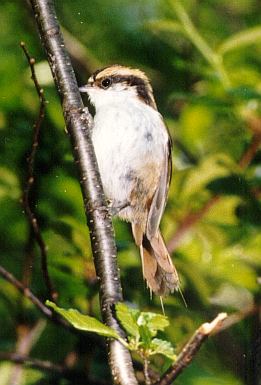
The photo above was borrowed from…

http://www.camacdonald.com/birding/JapaneseBush-Warbler(JJ).jpg

It doesn’t depict an Odedi (sorry), but a Japanese bush warbler C. diphone.

Refs - -

Beehler, B. 1983. Thoughts on an ornithological mystery from Bougainville Island, Papua New Guinea. Emu 83, 114-115.

Diamond, J. 1975. Distributional ecology and habits of some Bougainville birds (Solomon Islands). Condor 77, 14-23.

Filardi, C. E. & Moyle, R. G. 2005. Single origin of a pan-Pacific bird group and upstream colonization of Australasia. Nature 438, 216-219.

Hadden, D. 2004. Birds and Bird Lore of Bougainville and the North Solomons. Dove Publications Pty (Alderley, Queensland).

Jønsson, K. A. & Fjeldså, J. 2006. A phylogenetic supertree of oscine passerine birds (Aves: Passeri). Zoologica Scriptca 35, 149-186.

LeCroy, M. & Barker, F. K. 2006. A new species of bush-warbler from Bougainville Island and a monophyletic origin of southwest Pacifc Cettia. American Museum Novitates 3511, 1-20.

Orenstein, R. I. & Pratt, H. D. 1983. The relationships and evolution of the southwest Pacific warbler genera Vitia and Psamathia (Sylviinae). Wilson Bulletin 95, 184-198.

Rozendaal, F. G. 1987. Description of a new species of bush warbler of the genus Cettia Bonaparte, 1834 (Aves: Sylviidae) from Yamdena, Tanimbar Islands, Indonesia. Zoologische Mededelingen 61, 177-202.

Steadman, D. W. 1993. Biogeography of Tongan birds before and after human impact. Proceedings of the National Academy of Sciences, USA 90, 818-822.

- . 1995. Prehistoric extinctions of Pacific Island birds: biodiversity meets zooarchaeology. Science 267, 1123-1131.

Labels: ,