Saturday, October 14, 2006

Oh deer oh deer oh deer

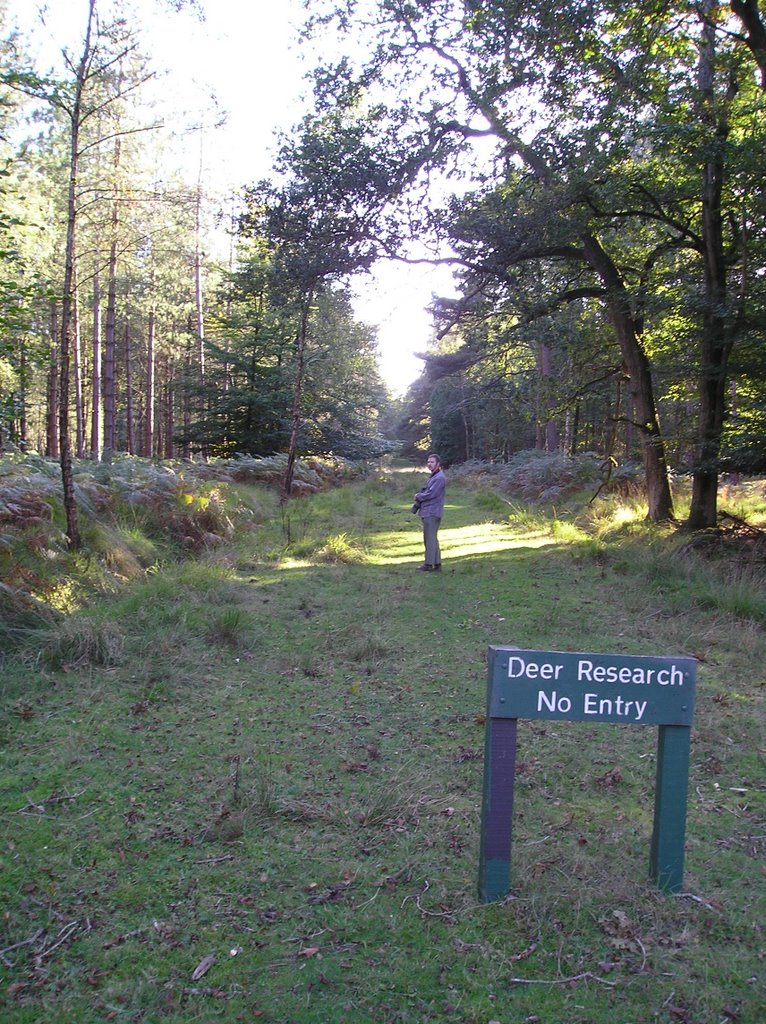
Welcome to Tetrapod Zoology’s one-hundredth blog post! And I’ve decided to crack open the champagne and celebrate by… writing a post all about temnospondyls rhinogradentians what happened to me on Friday the 13th. Well, originally I was going to do some kind of big analysis of subject distribution across the 100 posts, but having thought about it I can’t be bothered. Seriously, I’ll save that sort of thing for Tetrapod Zoology’s 1st birthday. For some time now Jonathan McGowan and I have been planning to go to the New Forest to watch the rutting deer, and right now is rutting season for Red deer Cervus elaphus, Fallow deer Dama dama, and Sika deer C. nippon. Jon is an outstanding, experienced naturalist (and excellent photographer, and professional taxidermist) and he might be best known for his association with the recently discovered green lizards of Boscombe Cliffs, Bournemouth (see Hunting green lizards in Dorset: new aliens or old natives?). And so it was that we headed off into the wild, eagerly awaiting the many close-hand encounters we would have with big wild deer.

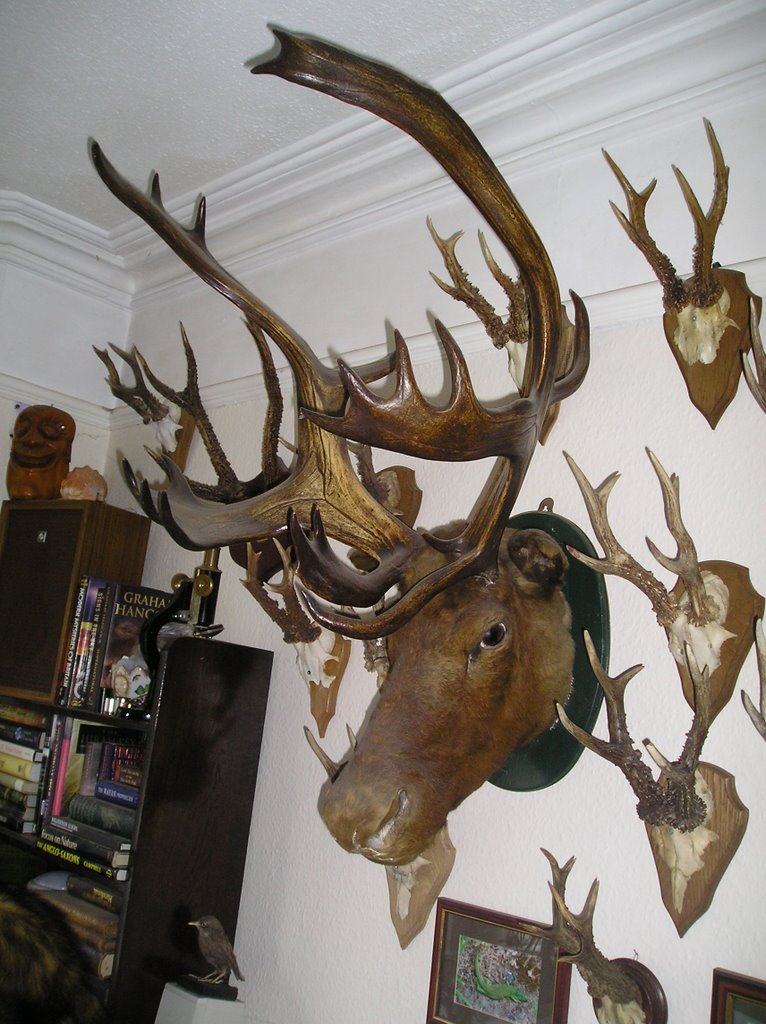
Jon’s collection of deer taxiderm specimens and antlers is amazing, as you can see from the photo above (which depicts only a small fraction of what he has). One of the centrepieces is the big animal you can see here, surrounded by roe deer. It’s an immense reindeer which blew me away in terms of its size and antler form: it appears to be an Osborn’s caribou Rangifer tarandus osborni Allen, 1902, a subspecies I’ve never seen before. Endemic to British Columbia and the Yukon, Osborn’s caribou is a reddish brown animal with a whitish lateral stripe and neck, and long and thick-beamed antlers that have semi-palmate brow and bez tines. And it’s a giant, as you see by comparing it with the adjacent roe. Geist (1999) puts this giantism down to growth in a highly favourable environment combined with a non-migratory habit. That’s right, not all reindeer migrate.

Reindeer are what Geist terms grotesque giants: species that exploit high-quality foods in cold climates, and are able to evolve luxury organs. The latter include large fat deposits, big and ornate antlers, tusks or horns, big brains, and manes or beards of long decorative hair. Big cold-adapted Pleistocene mammoths and rhinos are regarded by Geist as grotesque giants, as are big bears and, most interestingly, neanderthals and modern humans. Strongly adapted for life in open country, reindeer are the most cursorial of living deer. They have the proportionally biggest antlers of any living deer, the most complex pattern of pigmentation and array of ornamentation, among the showiest courtship display, and are among the most adaptable and behaviourally flexible of all deer. That last factor probably explains why reindeer are the only deer that have been properly domesticated.

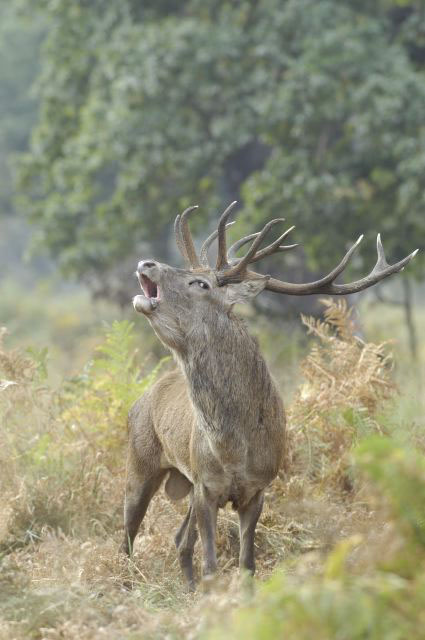
Anyway, once in the field we headed to a location well known as a regular red deer rut site. But, unfortunately, only a few deer were to be seen, and they were hardly active, spending most of their time lazing in the vegetation. It was a very warm and sunny day, so I can’t blame them. Red deer in Britain have an interesting history. While the species was historically native to Britain, it is doubted if this is true for any of the English populations (even that of Exmoor, often said to be descended from old native stock): Lowe & Gardiner (1974) found that the only truly native red deer are those of the Lake District and Scottish Highlands, with the others being derived from continental introductions. Red deer numbers waxed and waned between the 13th century and the present (Yalden 1999).

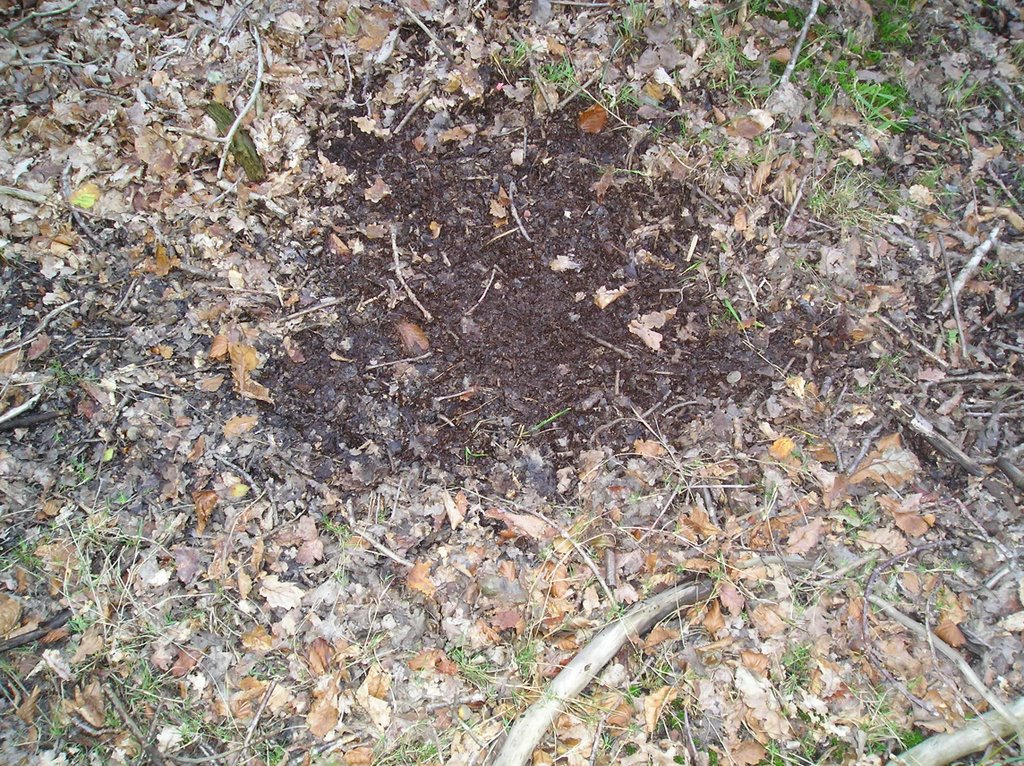
We also succeeded in hearing and seeing sika deer, though again not at the close range I was hoping for. Sika are sometimes described as combining an unconventional combination of characteristics: similar in size to fallow, they have a white rump recalling that of a roe, while their antlers are like those of a miniature red. As they flee, their pale rumps are prominent, and while we got to see quite a few fleeing rumps, we also got to within close range of a lone stag. He stopped and watched us for some time, and with large antlers that had ten points we thought that he was a magnificent individual. Prior (1963) stated that New Forest sika stags are unusual ‘for producing occasional heads of ten points instead of the usual eight’ (p. 72), so it’s good to confirm that ten-pointers are still around. Sadly, we weren’t close enough for me to get any photos. The adjacent photo is – honest – a scrape produced by a sika.

Sika are not native, having been introduced from China and Japan (read on) on multiple separate occasions. They haven’t spread that far, though there are amusing cases where populations introduced to islands (such as Brownsea Island in Poole Harbour) have swum to the mainland. Sika are ecotone deer that have been around since the Pliocene, and the larger cold-adapted forms of the species appear especially close to the ancestry of the apparently more advanced red deer. However, it has also been argued that things go the other way round, and that sika might descend from a red deer-like form.

In the New Forest, it is well known that sika occur south-east of the Bournemouth to London railway line, and that any seen north of it are shot. This is due to fears that they will interbreed with the ‘native’ red deer, as it is well documented that – despite their anatomical and ecological differences – the two species readily hybridise, with the hybrids being fully interfertile (which, incidentally, is relevant to the whole ‘domestic dogs represent a distinct species’ argument). Hybrids between red deer and sika have been known since 1940 when they were reported in the Lake District, and by the 1970s it became clear that the Irish deer of the Wicklow Mountains were pretty much all hybrids. Extensive hybridisation has occurred between the two elsewhere in the world, such as in New Zealand (Tate et al. 1997). Today, Scottish red deer – even those that look like good, honest reds – have been significantly contaminated by sika DNA.

As usual however, nature is inconsistent, and I am reliably informed that the latest data on New Forest deer shows that – even when sika get north of that railway line – they _do not_ hybridise with the reds. The consequence of this discovery is that the shooting of New Forest sika has stopped. Quite why sika and reds hybridise in Scotland and Ireland but not in southern England is beyond me, and I don’t know if anyone has proposed a reason. But here’s one. Britain’s introduced sika belong to two different subspecies: C. n. nippon of Japan and C. n. hortulorum of China. Maybe it’s only one of these subspecies that can routinely hybridise with C. elephus, and if this is so, then maybe that’s the subspecies that is doing the hybridisation in Scotland and Ireland. I don’t know, and I’d be interested if anyone does (Long et al. (1998) implied that at least some English sika are C. n. hortulorum whereas most British sika are C. n. nippon, but didn’t go into the subject further than that).

Incidentally, on New Zealand red deer have been extensively hybridised (via artificial insemination) with the highly distinctive Père David’s deer Elaphurus davidianus, and again the hybrids are fertile (Tate et al. 1997). This is odd given that Père David’s deer are significantly different genetically from red deer, differ from them in seasonality, behaviour, morphology and other details. There have also been attempts to cross Sambar C. unicolor with red deer on New Zealand (again via artificial insemination), though in this case only one calf survived of 400 inseminations (Muir et al. 1997).

You might wonder why New Zealanders are so interested in producing these unnatural hybrids. The answer is that the resulting animals are thought to be superior from the point of view of the deer farming trade, theoretically having a more flexible breeding season and shorter gestation period than pure red deer. Similar experiments involving Père David’s deer have been carried out in Scotland, with one argument for the introduction of Père David’s deer genes into red deer being that Père David’s deer is ‘in the words of one enthusiast “as tough as old boots”, and when it is not being eaten by Chinese peasants it will thrive almost anywhere’ (Tudge 1987). Tudge’s article – ‘Custom-built deer take to hills’ – implied that Père David’s x red hybrids would prove a big thing in the years to follow. Well, here we are in 2006 and I haven’t heard much about them lately. Hmm.

We have yet other deer in Britain, and again they are introductions, including Chinese water deer Hydropotes inermis and muntjacs. Muntjacs, aah yes, muntjacs….

For the latest news on Tetrapod Zoology do go here.

Refs - -

Geist, V. 1999. Deer of the World. Swan Hill Press (Shrewsbury).

Long, A. M., Moore, N. P. & Hayden, T. J. 1998. Vocalizations in red deer (Cervus elephus), sika deer (Cervus nippon), and red x sika hybrids. Journal of Zoology 244, 123-134.

Lowe, V. P. W. & Gardiner, A. S. 1974. A re-examination of the subspecies of Red deer (Cervus elephus) with particular reference to the stocks in Britain. Journal of Zoology 174, 185-201.

Muir, P. D., Semiadi, G., Asher, G. W., Broad, T. E., Tate, M. L. & Barry, T. N. 1997. Sambar deer (Cervus unicolor) x Red deer (C. elaphus) interspecies hybrids. The Journal of Heredity 88, 366-372.

Prior, R. 1965. Living With Deer. Andre Deutsch (London).

Tate, M. L., Goosen, G. J., Patene, H., Pearse, A. J., McEwan, K. M. & Fennessy, P. F. 1997. Genetic analysis of Père Davids’ x Red deer interspecies hybrids. The Journal of Heredity 88, 361-365.

Tudge, C. 1987. Custom-built deer take to the hills. New Scientist 114 (1555), 28.

Yalden, D. W. 1999. The History of British Mammals. T & A D Poyser (London).

Labels: , ,

Monday, September 11, 2006

Are Sumatran rhinos really ‘living fossils’?

One of my least favourite terms in the whole of natural history writing is ‘living fossil’, and its use and meaning are on my mind right now as Loren Coleman (of Cryptomundo) and I have just been debating it. What exactly do people mean when they talk of organisms being ‘living fossils’, and does this term actually mean anything at all?

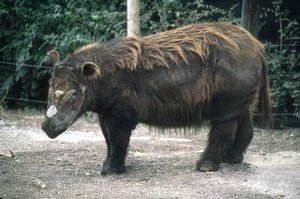
The event that sparked this off is the announcement that Sumatran rhinos Dicerorhinus sumatrensis have just been filmed on Borneo. Given how elusive the animals are (see below), this is a big deal, and all the more so given that the presence of a living Bornean population was only announced in 1986 (the discovery actually occurred in 1983 but was kept secret until 1986). Historically, Sumatran rhinos occurred across Sumatra and Borneo as well as north-eastern India, Myanmar, southern Bangladesh, the Malay Peninsula and possibly Vietnam and elsewhere. They were reported from Yunnan, China, as recently as the 1930s.

Because they are elusive, often nocturnal, and inhabit thick, often mountainous forests, it stands to reason that they are good at disappearing and reappearing. This goes for their presence on the Asian mainland as well as that on Borneo and Sumatra. John MacKinnon, the zoologist best known for his involvement in the discovery of the Saola Pseudoryx nghetinensis, has reportedly never seen a wild Sumatran rhino, despite all his time in the field and efforts to find them. Camera traps installed at Way Kamblas National Park, northern Sumatra, succeeded in photographing wild rhinos in 1995, allegedly the first time this had been done since 1932 (Bristow 1997).

Indeed, from the point of view of zoological discovery, Sumatran rhinos are interesting, having only been officially named by German biologist Johann Gotthelf Fischer von Waldheim in 1814. Actually, a published description of a Sumatran rhino had appeared 20 years prior to this, when William Bell sent a description and some illustrations to Joseph Banks, the then-president of the Royal Society of London. Bell had examined the animal after it had been shot near Fort Marlborough, Sumatra, in 1793. Even earlier, a pair of horns described by Jacobeus (1696) have been regarded by some as of Sumatran rhino origin. Linnaeus assumed that Jacobeus had been writing about the Black rhino Diceros bicornis, and as a result assumed ‘India’ as the type locality for this species.

Fischer von Waldheim had named his new rhino as a species of the genus Rhinoceros, but in 1841 Constantin Wilhelm Lambert Gloger thought that the species deserved its own genus, Dicerorhinus. Actually, an older generic name – Didermocerus – was coined by Joshua Brookes in 1828. Mostly forgotten about until George Simpson discussed it in 1945, it has been proposed that the publication where Didermocerus appeared (A Catalogue of the Anatomical and Zoological Museum of Joshua Brookes) should be considered invalid for the purposes of nomenclature. This view has a lot going for it, but for the fact that Brookes is usually taken as the author of Acinonyx, the cheetah genus (Boylan 1967). During the 1870s the taxonomy of Sumatran rhinos became more confusing. Sclater (1872a, b) argued that there were two species, Rhinoceros sumatrensis and R. lasiotis. Gray (1872, 1873) then thought that R. lasiotis was the ‘typical’ Sumatran rhino, that R. sumatrensis was synonymous with a species he had named in 1854 (R. crossii, later Ceratorhinus crossii), and that Malaysian and Burmese rhinos represented the new species C. niger and C. blythii.

Few of these putative taxa have stood the test of time. R. lasiotis (now R. s. lasiotis) has, and has been recognised as the subspecies of mainland Asia (Groves 1967). It is generally thought to be extinct, but a few individuals might persist in Myanmar and in 1999 it was announced that Sumatran rhinos had been seen near the Indian border with this country. In 1991 it was thought possible that individuals might also survive in Thailand and Laos (Martin & Vigne 1991). Groves & Kurt (1972) noted that the status of R. crossii remains somewhat uncertain: it is based on a single unusual and very long (80 cm) horn that is probably (but not definitely) from D. sumatrensis. The Bornean population was named as a distinct subspecies, D. s. harrissoni, in 1965 (Groves 1965), which makes it the largest recently named terrestrial mammal.

A small, two-horned species, the Sumatran rhino has long, shaggy reddish-brown fur covering its body and limbs. ‘Small’ for a rhino means that it is about 3 m long, 1-1.5 m tall at the shoulder, and between 800 and 2000 kg in weight. It has large lower canines (but no upper canines) that it uses in combat and both horns are short, the second (aka frontal) may be so low that it is barely more than a bump. A few individuals have been recorded with very long nasal horns of nearly 40, and even nearly 70, cm long.

In terms of their global population, Sumatran rhinos are in big trouble, and the estimated world population of 300 (as of 2001) is thought to be the remnants of one that crashed by c. 50% during the 1990s, mostly due to illegal hunting and habitat loss. Captive breeding has unfortunately not helped in boosting numbers: until fairly recently it was thought that Sumatran rhinos did quite well in captivity – they were the first rhino species to breed in captivity (a female kept at Calcutta gave birth in 1889), and a specimen kept at London died at age 32 (this individual was, incidentally, the type specimen of D. s. lasiotis). By the 1990s however, it had to be concluded that 20th century captive breeding had been a failure, with not one of the 39 zoo-kept individuals having bred (during 2004 however, one calf was born at Cincinnati Zoo). 18 of these 39 were dead by the late 1990s. Why the rhinos fare badly in captivity is not known, but it might be that they find small enclosures and exposure to sunlight too stressful. The solution to this problem might be the Sumatran sanctuary at Way Kambas National Park. European, American and Asian zoos are sending their rhinos to this park (Bristow 1997).

To get back to their current appearance in the global media, it seems inevitable that, whenever Sumatran rhinos are mentioned, that old chestnut about them being a ‘living fossil’ is trotted out. It is invariably stated that they are particularly close to the Pleistocene woolly rhino, Coelodonta, and it is often implied that their persistence to the presence is remarkable and that they should be regarded as an anachronism. Such comments aren’t restricted to the popular literature: Groves & Kurt (1972, p. 4) wrote ‘As presently defined, Dicerorhinus is the genus that gave rise to all living Rhinocerotidae; in this sense, and in that it closely resembles certain Miocene species, the Sumatran rhino may be regarded as a living fossil’ [some of these statements are arguable: read on].

This, I suppose, answers the question as to what a ‘living fossil’ is… it’s an archaic animal (i.e., one whose anatomy harks back to an early stage in its group’s evolution) that appears to have persisted for a long time, relatively unchanged. The problem is that this is so vague that it’s all but meaningless. What is a ‘long time’, given that different forms of life evolve at different paces? And what is ‘relatively unchanged’, given that the same sort of body shape can persist for tens of million of years?

I know that this ‘living fossil’ claim has a ‘long and useful educational tradition’, and that such august scientists as E. O. Wilson have employed the Sumatran rhino as such (go here for the quote). My point is that all of this is misleading, and that in fact Sumatran rhinos are no more ‘living fossils’ than many other living mammal species. Consider the following.

Is D. sumatrensis an old species?

No, the living species D. sumatrensis doesn’t have a fossil record extending beyond the Pleistocene. A few bone and teeth are known from the late Pleistocene of Borneo and a fossil subspecies, D. s. eugenei Sody, 1946, is known from the Holocene of Sumatra. So far as we know therefore, the Sumatran rhino isn’t a particularly old species. It’s apparently less than about 2 million years old, and thus utterly typical for a living mammal.

Is Dicerorhinus particularly old and/or conservative?

Dicerorhinus has a fossil history going back to the Miocene (and perhaps to the Late Oligocene). However, a great many living mammal genera have fossil records going back this far. Examples - picked at random - include Geomys (pocket gophers), Muscardinus (hazel dormice), Glis (edible dormice), Martes (martens), Genetta (genets), Viverra (civets), Tursiops (bottlenose dolphins), Orcinus (killer whales), Physeter (sperm whales), Balaenoptera (rorquals), Tragelaphus (bushbuck, kudus etc), and many others. As discussed in a previous post (Pleistocene refugia and late speciation: are extant bird species older than we mostly think?), some modern bird genera seem to have first appeared in the Miocene, and many thoroughly modern amphibians and reptile genera go back this far or further.

So if Sumatran rhinos should be regarded as ‘living fossils’, why aren't bottlenose dolphins, blue whales, edible dormice, sitatungas, gannets, barn owls or peafowl ever referred to as such? It seems either that we are surrounded by taxa that should be regarded as ‘living fossils’, or that the term is pretty much useless given that most modern animal species belong to groups that have a fossil history.

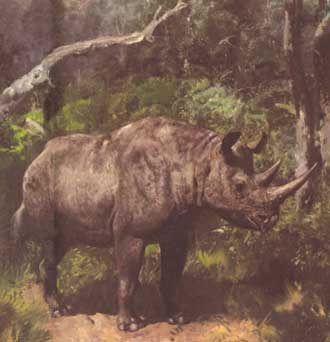
And was Dicerorhinus conservative throughout its evolutionary history? No, Dicerorhinus species were quite diverse. Among the many species, some (such as the Pleistocene Christol’s rhino D. megarhinus and Etruscan rhino D. etruscus) were gracile and long-legged compared to D. sumatrensis, others (like Merck’s rhino D. kirchbergensis) were large, while others (like the Steppe rhino D. hemitoechus) were apparently specialized grazers, with a downwardly-flexed head and neck. Incidentally, not all species traditionally placed in Dicerorhinus are still thought to belong there. Some belong to the closely related Lartetotherium for example (Cerdeño 1995) [the adjacent painting is Burian's restoration of an Etruscan rhino. Note the long legs].

Is D. sumatrensis anatomically archaic?

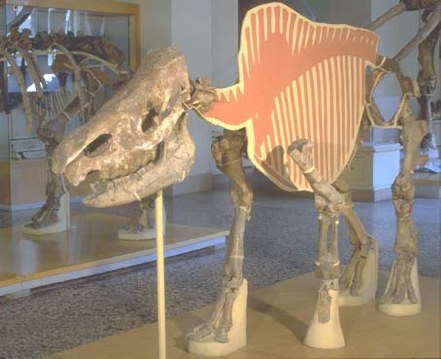
Interestingly (and in contradiction to that quote from Groves & Kurt 1972, p. 4, given above), most of the anatomical features that make Dicerorhinus appear ‘primitive’ seem to be reversals. That is, the genus has uniquely ‘switched back’ to primitive character states, but actually descended from ancestors with a more ‘modern type’ morphology (Cerdaño 1995). Furthermore, the genus seems not to be ancestral to other living rhinos, but a lineage that, within the rhinocerotid clade Rhinocerotinae, is closer to Rhinoceratina (containing Rhinoceros) than it is to Dicerotina (containing Ceratotherium and Diceros). As such, Dicerorhinus isn’t really any older than other extant rhino genera (Tougard et al. 2001) [image below features a reconstructed skeleton of a Steppe rhino. Borrowed from the La fauna del Quaternario site].

Everything restated, more simply… ish

Sumatran rhinos have been thought of as ‘living fossils’ because – supposedly – they belong to a particularly old group, the group they belong to was particularly conservative throughout its history, and they are anatomically archaic. Ignoring for a moment the fact that the species itself appears to be geologically young, these assumptions are no truer for Sumatran rhinos than they are for a great many other living tetrapods, and at worse they are just plain wrong. Dicerorhinus is NOT particularly old, it was NOT particularly conservative, and it is NOT particularly archaic in terms of anatomy! And if you want to argue that it is (in answer to all of the above), then I demand that Bottlenose dolphins and Peacocks and all those other tetrapods now be consistently referred to as ‘living fossils’ too, forever more.

Why then do we persist with this ‘living fossil’ twaddle? Mostly, I suppose, this is because some animals look ‘more ancient’ than others, and when it is found that they belong to a group with a reasonable fossil history… presto: living fossil. But as I have tried to show here, this term is essentially meaningless. Should we use it at all? If a single species could be shown to have persisted, unchanged, for a shockingly long length of geological time, then I suppose the term would be appropriate. But what is ‘shockingly long’. All in all, it has to be said that the whole concept of the ‘living fossil’ is utterly subjective, hence its uselessness.

Update: a response to this post has been written by Loren Coleman... Sumatran rhinos are living fossils. I think we'll have to agree to disagree. For the latest news on Tetrapod Zoology do go here.

Refs - -

Boylan, P. J. 1967. Didermocerus Brookes, 1828, v. Dicerorhinus Gloger, 1841, (Mammalia: Rhinocerotidae), and the validity of A Catalogue of the Anatomical and Zoological Museum of Joshua Brookes, 1928. Bulletin of Zoological Nomenclature 24, 55-56.

Britow, M. 1997. The rhino’s return. BBC Wildlife 15 (2), 68-69.

Cerdeño, E. 1995. Cladistic analysis of the family Rhinocerotidae (Perissodactyla). American Museum Novitates 3143, 1-25.

Gray, J. E. 1872. On the double-horned Asiatic rhinoceros. Annals and Magazine of Natural History 10 (series 4), 208-209.

- . 1873. On the dentition of rhinoceroses (Rhinocerotes) and on the characters afforded by their skulls. Annals and Magazine of Natural History 11 (series 4), 356-361.

Groves, C. P. 1965. Description of a new subspecies of rhinoceros, from Borneo, Didermoceros sumatrensis harrissoni. Säugertierk. Mitt. 13, 128-131.

- . 1967. On the rhinoceroses of southeast Asia. Säugertierk. Mitt. 15, 221-237.

- . & Kurt, F. 1972. Dicerorhinus sumatrensis. Mammalian Species 21, 1-6.

Jacobeus, O. 1696. Muséum Regium. Nürnberg.

Martin, E. B. & Vigne, L. 1991. The horn quintet. BBC Wildlife 9 (5), 356-357.

Sclater, P. L. 1872a. Untitled note. Proceedings of the Zoological Society of London 1872, 493-494.

- . 1872b. Untitled note. Proceedings of the Zoological Society of London 1872, 790-794.

Tougard, C., Delefosse, T., Hänni, C. & Montgelard, C. 2001. Phylogenetic relationships of the five extant rhinoceros species (Rhinocerotidae, Perissodactyla) based on mitochondrial cytochrome b and 12S rRNA genes. Molecular Phylogenetics and Evolution 19, 34-44.

Labels: , ,

Monday, August 14, 2006

How big is a white rhino?

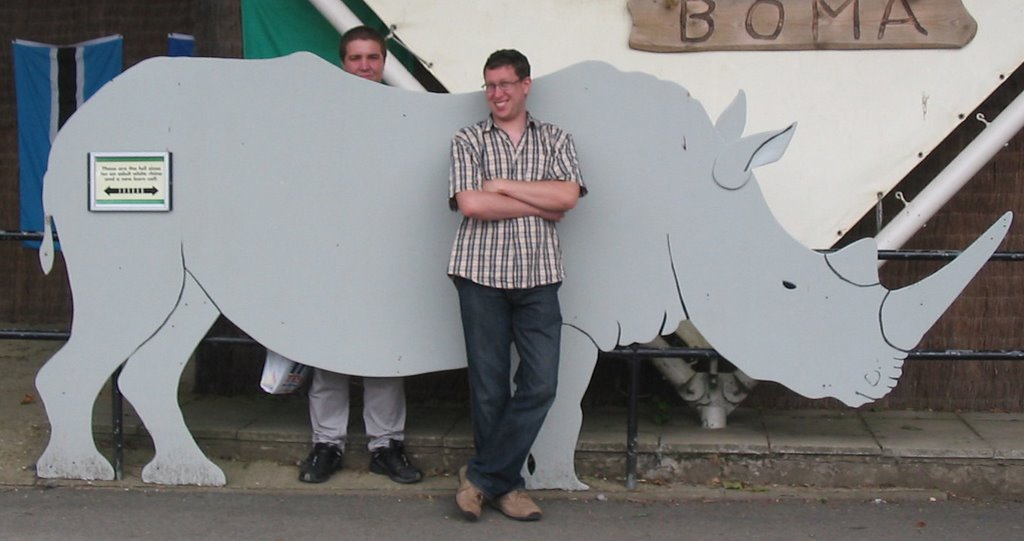
Despite efforts to resist, I cannot help but post yet more Marwell Zoo photos. Mostly these photos were taken by Mark Witton: thanks Mark. Firstly, I'm sure you're wondering how big a White rhino Ceratotherium simum is. Well, here's the answer. Ok, so it's a wooden cut-out and not a real rhino, but I assure you it's life-size. Graeme (at rear) is over 6 ft tall: I'm 5'10.


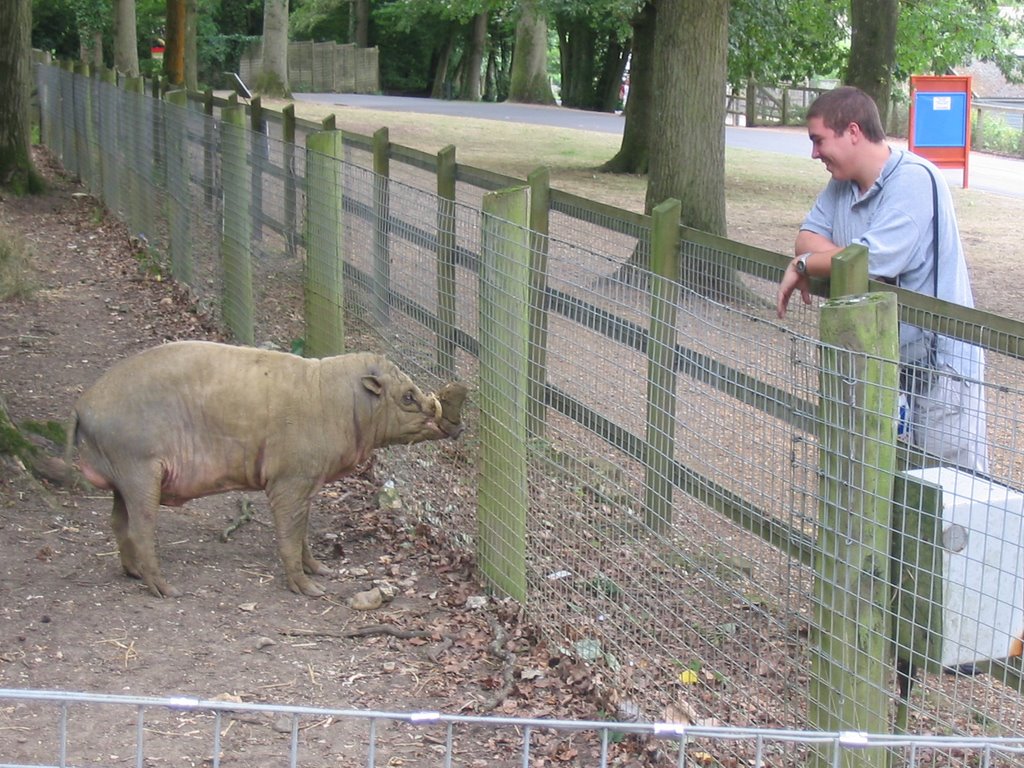
And speaking of Graeme, here comes the long-awaiting, super-predictable photo entitled 'Graeme meets the folks'. He knew what we were up to when we took the photo. The artiodactyl in the photo is a charismatic and very friendly male Babirusa. Until recently I would have labelled the species Babirousa babyrussa, but - yet again - the species-level taxonomy of babirusas has recently been revised (for a previous post on over-zealous lumping in extant megamammals see Giraffes: set for change). A blog post is planned: if you can't wait until then check out Meijaard & Groves (2002a, b). Babirusa males have large curving upper canines that curve dorsoposteriorly as they emerge from the dorsal surface of the snout (yes, they emerge from the dorsal surface of the snout). This male is in the habit of covering his tusks with wet mud, thereby obscuring them from view. I have no idea why he does this and have never read of this behaviour.


Here's a photo of my back and the big male giraffe they have at Marwell. I have nothing interesting to say about it, but you can never get bored with giraffes can you.


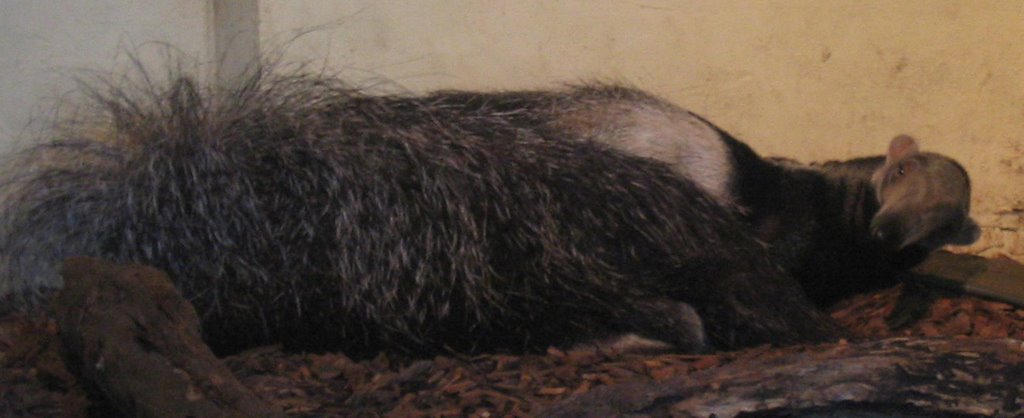
As mentioned in the ground hornbill post, we were 'frustrated by anteaters'. What did I mean by this? Well, on my previous visit to Marwell the anteater had remained asleep and curled up, tail folded over its body and head (for photo go here). And this time it was in exactly the same place and exactly the same position. Except for a few brief seconds when it raised its tail and lifted its head: Mark was quick enough to get this photo. I suppose some time it might get up and walk around, but as for whether or not I'll ever see this, I do not know.

Coming next: finally, the Cupar roe deer carcass (for background info see British big cats: how good, or bad, is the evidence?). For the latest news on Tetrapod Zoology do go here.

Refs - -

Meijaard, E. & Groves, C. 2002a. Proposal for taxonomic changes within the genus Babyrousa. Asian Wild Pig News 2 (1),9-10.

- . & Groves, C. 2002b. Upgrading three subspecies of babirusa (Babyrousa sp.) to full species level. Asian Wild Pig News 2 (2),33-39.

Labels: , ,

Wednesday, August 02, 2006

Why putting your hand in a peccary’s mouth is a really bad idea

In a recent post I discussed the apparent recent discovery of a new, fourth peccary species (Meet peccary # 4). While this case has now become relatively well known in the cryptozoological world, I’ve learnt from Matt Bille* that not all artiodactyl experts are ready to accept the animal, the so-called Giant peccary, as a valid new species. We await developments. But of course there’s lots more to peccaries than their species-level diversity, and here we’re going to look at a few other areas of interest: their former diversity and fossil history, and their fascinating cranial anatomy.

* Best known in the cryptozoology world for the newsletter he previously produced (Exotic Zoology) and for his books: Rumors of Existence and the new Shadows of Existence (see Hancock House website).

Peccaries today are entirely American, so you might be surprised to hear that fossil evidence indicates that they originated in the Old World, and in fact were still there until as recently as the Late Miocene. The oldest named peccary is Egatochoerus* from the Upper Eocene of Thailand (Ducrocq 1994), and similarly-aged taxa are known from southern China. If these forms are peccaries (read on), then they migrated into North America early in their history, as peccaries made their American debut during the Early Oligocene, and possibly even in the Late Eocene given that there are possible records of Thinohyus from this time.

* Incidentally this is one of those taxa whose name incorporates an acronym: in this case EGAT, the Electricity Generating Authority of Thailand.

At about the same time, peccaries also seem to have got from Asia into Europe as several Oligocene genera – including Doliochoerus and Propalaeochoerus – appeared suddenly in western Europe, yet without antecedents. European peccaries, mostly belonging to the clade Doliochoerinae Simpson, 1945, persisted until the end of the Miocene, and members of this group also inhabited Asia during the Miocene. It was also in the Miocene that peccaries invaded Africa. Morotochoerus from Middle Miocene Kenya seems to be ancestral to Schizochoerus (Pickford 1988), a genus that first appeared in Africa but had spread to Asia and Europe by the Late Miocene (Pickford 1978). Africa-Arabia was an island until the Early Miocene, incidentally, when a contact with Asia was formed, allowing African taxa to colonise Eurasia. This is known as the Proboscidea Datum Event as, obviously, it’s the point when African proboscidean groups make their first appearance in Eurasia. The temporal and geographical distribution of Morotochoerus and Schizochoerus indicates that peccaries invaded Africa from Asia during or after the Proboscidea Datum Event, with one lineage then leaving Africa later in the Miocene. In and out of Africa, in other words (which, incidentally, is the title of a paper on primate evolution by C.-B. Stewart and T. R. Disotell).

Some of these Old World peccaries were rather unusual. The doliochoerine Lorancahyus of Miocene Spain, for example, had tubulidentate teeth, and if that word sounds familiar that’s probably because you’ve seen it before as the group name for aardvarks: Tubulidentata. Tubulidentate teeth are traversed by tubules, hence the name, and they’re thought to be an evolutionary response to the ingestion of large abrasive particles (such as quartz grains) such as those taken into the mouth with soil. It’s even been suggested that some fossil teeth from Miocene Spain, originally described as belonging to aardvarks, may actually be from this lineage of peccaries (Pickford & Morales 1998). What were these peccaries doing with their aardvark-like teeth? As usual, we don’t know.

But are these Old World peccaries really peccaries? Well, perhaps not, as some workers have expressed scepticism, stating for example that the identification of Old World peccaries as peccaries proper is ‘not based on synapomorphy’ (Wright 1998, p. 389), the implication therefore being that these taxa might be suids that are convergently peccary-like in a few features. Van der Made (1997) proposed that Old World peccaries are in fact different enough from peccaries proper to be regarded as a different family, Palaeochoeridae Matthew, 1924. This is problematical however as the type genus for this group, Palaeochoerus from Oligocene-Miocene Africa and Europe, almost certainly is a suid proper and not a peccary, Old World or otherwise. Furthermore, Pickford (1998) argued that Van der Made’s concept of Palaeochoeridae is probably polyphyletic, including not only Old World peccaries and suids but also groups like the sanitheriids of the Old World Miocene. On the other hand other workers have described some of the Old World peccaries as ‘unambiguous Tayassuidae’ (Ducrocq 1994, p. 765).

While the debate isn’t over, Old World peccaries do at least share characters with unambiguous American peccaries that aren’t seen in suids: a vertical lower canine located close to the premolar row, a prominent trigonid on the fourth upper premolar, thin enamel, and other features (Pickford & Morales 1989). Old World and New World peccaries also lack many characters present in all suids, but these carry less weight as, theoretically, they could be retained plesiomorphies if Old World peccaries are suids and not peccaries proper. They include the lack of dentary symphyseal splaying around the canines and the lack of an obliquely oriented lower tooth row. But for the time being I’d say that Old World peccaries really do look like peccaries after all, not that I’m an expert.

Like pigs, peccaries use a specialised rhinarial disk for rooting in soil and their snout is specialised for this behaviour. The disk itself is an unusual novelty, the snout is proportionally lengthened compared to that of other artiodactyls and the nuchal muscles (which help support the head) are hypertrophied and with enlarged attachment areas. However, the muscles that operate the disk originate from different points in peccaries and suids.

Strangely, all of the skull sutures in adult peccaries are completely closed, and in fact even juveniles exhibit closure of certain of the sutures ordinarily open in young mammals. This obviously rules out the possibility of any sort of cranial kinesis. A research team led by Katherine Rafferty and Susan Herring have been looking at strain patterns in pig skulls, and they’ve found that during occlusion of the teeth, the snout bones are deformed and pull apart slightly at their sutures (Rafferty et al. 2003). I’m guessing that this is somehow relevant to the major fusion of the sutures seen in peccaries (maybe peccaries have evolved a novel solution to coping with strains built up during tooth occlusion), but I don’t know if this area has been studied. It’s surely relevant to stuff we’ll get to in a minute.

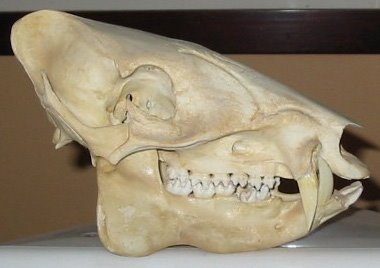
Peccaries are well known for having big, scary canines and, unlike suids, both the upper and lower canines of peccaries are used in biting. Also in contrast to those of suids, both canines in peccaries are vertically implanted: in suids the upper canine exits the maxilla anterolaterally, and then curves dorsally. In all placental mammals the lower canine bites ‘ahead’ of the upper canine (look at sloths and you’ll see that they differ – almost certainly because one of their canines isn’t actually a true canine), and in peccaries the almost total lack of enamel on the posterior surface of the lower canine means that it is constantly sharpened as it moves against the enamelled anterior face of the upper canine. Because the upper and lower canines tightly interlock, peccaries are virtually incapable of moving the lower jaw from side-to-side when the jaws are closed. A special mucosal pocket, bordered by a raised boss on the maxilla termed the canine buttress, houses the lower canine when the jaws are closed (Herring 1972).

The tight interlocking of the canines prevents jaw movement during full occlusion, but there’s more: bony stops around the jaw joint further prevent anteroposterior movement of the jaws when they’re closed. Consequently the jaws can only open and close in a simple hinge-like arrangement. Herring (1972, p. 502) suggested that ‘this action probably helps to guide the lower canine into its correct occlusal relationship, thus preventing injury to soft tissues’.

But exactly why do the canines interlock? Inspired by Herring’s study, Kiltie (1981) studied peccary teeth in detail and noted a correlation between tooth morphology and a diet of hard nuts and seeds. Kiltie didn’t propose that the canines were used to break open the food items, but that, like the bony stops around the jaw joint itself, their interlocking helped prevent dislocation of the joint when tremendous force was applied across the molar teeth. Several other features of the peccary dentition are in agreement with the idea that peccaries are specialised for breaking open rock-hard objects, as are behavioural studies. Captive animals are reported to often try to break open excessively hard nuts and seeds. I wonder if anyone has ever measured the bite strength of a peccary. Whatever, all the more reason not to put your hand in a peccary’s mouth, and to have those new fences up at Marwell Zoo (go here).

If Kiltie is right about the bracing function of the canines, then this would explain why – unlike many other mammals that use their canines as offensive weapons – peccaries are not sexually dimorphic in canine size. They aren’t dimorphic in body size, nor in head shape, either. But this isn’t the whole story, as fossil peccaries ordinarily are dimorphic, with many forms exhibiting significant (i.e., distinctly bimodal) differences in canine size (Wright 1998). In fact what’s almost bizarre is that fossil populations of the living species exhibit sexual dimorphism in canine size, meaning that the living populations lost dimorphism somewhere along the way.

So what gives? We don’t know why sexual dimorphism was lost in the group (decreasing need to avoid niche overlap, due to declining diversity in contemporaneous megafauna?), but comparison with related groups, and examination of the peccary fossil record, indicates that sexual dimorphism in canine size is primitive for the group (it’s the condition they inherited from their ancestors). Use of the canines as bracing structures therefore looks like an exaptation: a new use for a set of structures that were previously used for something else.

I did want to talk about the history of peccaries in the Americas, but I’ve run out of time. Coming next: probably those sexy tupuxuarids (go here for teaser). For the latest news on Tetrapod Zoology do go here.

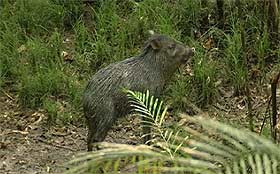
Many thanks to Steve Bodio (of Querencia) for the Collared peccary Tayassu tajacu skull photos that appear here. The Collared peccary photo at top is from birdfotos.com and the White-lipped peccary T. pecari photo is from the Cites sites.

Refs - -

Ducrocq, S. 1994. An Eocene peccary from Thailand and the biogeographical origins of the artiodactyl family Tayassuidae. Palaeontology 37, 765-779.

Herring, S. W. 1972. The role of canine morphology in the evolutionary divergence of pigs and peccaries. Journal of Mammalogy 53, 500-512.

Kiltie, R. A. 1981. The function of interlocking canines in rain forest peccaries (Tayassuidae). Journal of Mammalogy 62, 459-469.

Pickford, M. 1978. The taxonomic status and distribution of Schizochoerus (Mammalia, Tayassuidae). Tertiary Research 2, 29-38.

- . 1998. A new genus of Tayassuidae (Mammalia) from the Middle Miocene of Uganda and Kenya. Annales de Paléontologie 84, 275-285.

- . & Morales, J. 1989. On the tayassuid affinities of Xenohyus Ginsburg, 1980, and the description of new fossils from Spain. Estudios Geologicos 45, 233-237.

- . & Morales, J. 1998. A tubulidentate suiform lineage (Tayassuidae, Mammalia) from the Early Miocene of Spain. Comptes Rendu de l’Academie des Sciences, Paris, Serie II 327, 285-290.

Rafferty, K. L., Herring, S. W. & Marshall, C. D. 2003. Biomechanics of the rostrum and the role of facial sutures. Journal of Morphology 257, 33-44.

Van der Made, J. 1997. Systematics and stratigraphy of the genera Taucanamo and Schizochoerus and a classification of the Palaeochoeridae. Proceedings of the Koninkliijke Nedderlandse Akademie voor Wetenschappen 100, 127-139.

Wright, D. B. 1998. Tayassuidae. In Janis, C. M., Scott, K. M. & Jacobs, L. L. (eds) Evolution of Tertiary Mammals of North America. Volume 1: Terrestrial Carnivores, Ungulates, and Ungulatelike Mammals. Cambridge University Press, pp. 389-401.

Labels: , ,

Friday, July 21, 2006

Meet peccary # 4

Having spent the better part of the day tidying up the house for the garden party we’re having tomorrow (yet again a celebration of my graduation: will this decadence ever end?), I thought I should try and finish one of the blog posts I said I would write. You know, the one on peccaries [first promised in More on what I saw at the zoo].

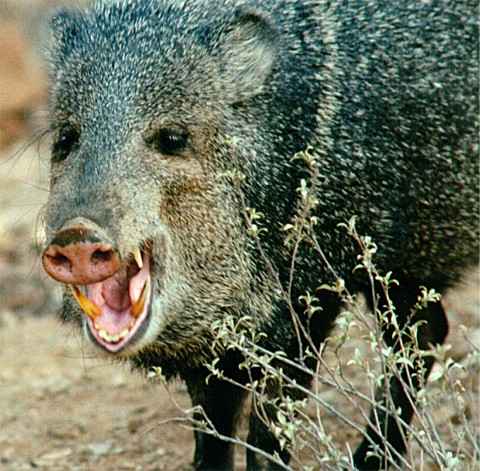
Peccaries are predominantly herbivorous, pig-like artiodactyls, restricted today entirely to the Americas, and for reasons that I’ll get to in a minute EVERYONE should be talking about them right now. Living species range in weight from 15-40 kg. They are highly social, living in mixed-sex herds of just a few individuals to several hundred, and females produce just one or two precocial babies that follow the mother soon after birth. Peccaries make an interesting assortment of noises: Collared peccaries Tayassu tajacu produce loud, dog-like barks, and White-lipped peccaries T. pecari scream, bellow and retch when in large groups (small groups tend to be quiet). All species make loud tooth-clacking noises, especially when disturbed.

Peccaries are ecologically flexible, with the three [cough cough] living species being distributed across rainforest, parkland, scrubland, steppe and even desert, and with Collared peccaries in fact occupying all of these habitats. Habits differ according to habitat: rainforest Collared peccaries are diurnal, eat fruit, palm nuts and shrubs, and sleep in burrows, while desert populations are nocturnal, eat mostly cacti, and don’t use burrows. This flexibility is reflecting in their variable tooth anatomy. Judging from fossils the primitive tooth type for peccaries is bunodonty (viz, where each tooth sports multiple low rounded mound-like cusps), but zygodonty (viz, where mound-like cusps are connected by transverse crests) evolved several times. Among living species, the bunodont White-lipped peccary mostly eats nuts while the zygodont Chacoan peccary Catagonus wagneri mostly eats cacti. The Collared peccary includes both bunodont and zygodont individuals across its range, and it seems that desert populations are more zygodont while populations from wetter places tend to be bunodont (Wright 1998). Peccaries are reported to occasionally eat carrion, and they will also eat snails and other invertebrates as well as small vertebrates.

The Collared peccary or Javelina Tayassu tajacu (or Pecari tajacu or Dicotyles tajacu) is the best studied species and is the archetypal peccary, occurring from central Arizona and central Texas south to northern Argentina (though with introduced populations in northern Texas, southern Oklahoma and Cuba). Its nomenclature is a bit confused: some authors use the generic name Dicotyles G. Cuvier, 1817 or Pecari Reichenbach, 1835 for it, but most common is its inclusion within Tayassu Fischer, 1814. Pecari is apparently an objective synonym of Dicotyles and thus not available, and use of Dicotyles therefore depends on whether or not you consider this species distinct enough from the White-lipped peccary to warrant separation. Indeed this confusion is related to a similar controversy over which formal name is used for peccaries: are they Tayassuidae Palmer, 1897 or Dicotylidae Gray, 1868? A few artiodactyl specialists make a point of using the latter name, but the former is more widely used and would easily win in a fight.

Collared peccaries release an odour like cheese or chicken soup, apparently (Emmons 1997). In fact a vernacular name for them in parts of the USA is musk hog, and you are said to smell them before you see them.

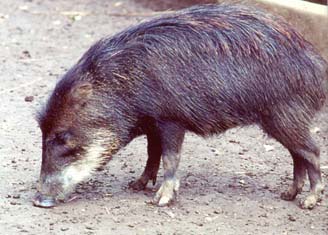
The White-lipped peccary, a species that ranges from southern Mexico to Argentina (and has also been introduced to Cuba), is substantially bigger than the Collared peccary. Mostly an animal of forests, it is semi-nomadic. The third species, the Chacoan peccary, Roman-nosed peccary or Tagua, is particularly notable in being both relatively recently discovered in living state, and for being initially named from fossils. I mentioned it before in a post on rodents (New, obscure, and nearly extinct rodents of South America.... and when fossils come alive). The species’ scientific history began in 1930 when, in his lengthy paper on Argentinian fossil peccaries, C. Rusconi named the new subspecies Platygonus carlesi wagneri. By 1948 Rusconi had decided that this form was distinct enough for its own species, P. wagneri.

The story then moves on to 1972 when, while working on a mammal inventory project in the semiarid thorn forest and steppe of the Gran Chaco area of Argentina, Paraguay and Bolivia, Ralph Wetzel and colleagues were surprised to hear from local people of a large peccary – distinct from the Collared and White-lipped – known to them as the tagua, pagua or curé-buro (meaning donkey-pig). Their enquiries eventually led to the successful procurement of tagua skulls, and they clearly represented a third, modern-day peccary species. Yet again we see a case where good, honest, card-carrying zoologists track down an ethnoknown animal with successful results, or in other words an unarguable example of cryptozoological investigation being carried out by people who don’t consider themselves cryptozoologists (for other examples see At last: the Odedi revealed and The interesting and contentious discovery of the kipunji). Rather than being new, it now turned out that the tagua was the same thing as Rusconi’s fossil species Platygonus wagneri: it really was a ‘fossil come to life’. But rather than being a member of Platygonus, a genus known from the Miocene, Pliocene and Pleistocene of both North and South America, Wetzel concluded that the species was instead better classified within Catagonus, a genus first named by Florentino Ameghino in 1904 for Pleistocene Argentinian fossils (Wetzel 1977a, b, Wetzel et al. 1975) [The adjacent picture shows two captive Chacoan peccaries, borrowed from the Florida Museum of Natural History site. The individual at the rear is scent-marking a fence post with its tail gland].

The Chacoan peccary is specialised for life in semiarid forests and steppes. It browses on ground cacti, is reported to not drink, and is superior in cursorial ability compared to other living species. Its teeth are particularly tall-crowned and it only has two hind toes, not three like other living peccaries. Reports from hunters suggest that it occurs in several parts of Bolivia where its presence has yet to be verified (Mayer & Wetzel 1986) and it turns out that its fur was being used in the manufacture of New York coats and hats long prior to 1972.

But here’s the big news. While the 1975 discovery of the Chacoan peccary was a major zoological discovery – indeed one of the most significant mammalogical discoveries of the 20th century – it seems that history is repeating itself, for there is now a fourth living peccary species: the Giant peccary. As in the case of the Chacoan peccary, this new species appears to have been discovered by listening to local people: in this case the Caboclos people (descendants of rubber collectors) of the Brazilian Amazon. And the discover is Marc van Roosmalen, the Dutch primatologist well known for the many new species of primate he has discovered (about 20) within recent years.

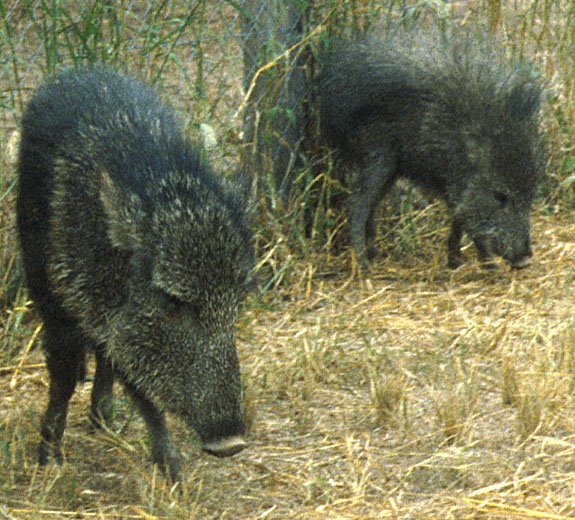
After learning of the fabled new peccary, apparently larger than the documented species, van Roosmalen set off with GEO magazine author and film maker Lothar Frenz and two photographers. And after four days of waiting in a hide they were rewarded with views of a group of four of the animals. Good photos were obtained, and one is reproduced here (at top). The animals look distinct from the other living peccaries – they’re most like Collared peccaries but larger and without the collar, and they’re reported to be even bigger than Chacoan peccaries, hence the name Giant peccary.

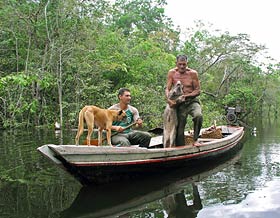
German newspapers first reported the successful observation of live Giant peccaries in June 2004, and the news was apparently held back in order to coincide its release with the airing of Frenz’s documentary on the expedition. So far as I can tell however, Karl Shuker was first to break the news as he mentioned it in his 2002 book The New Zoo. Citing personal communication from van Roosmalen, Shuker implied that the Giant peccary had first been encountered in January 2000 (Shuker 2002). It also seems that van Roosmalen and Frenz observed the successful capture and killing of one of the animals: an article in Suiform Soundings* entitled ‘New mammal discovered in South America – and eaten’ (Anon. 2004) stated that ‘Frenz said he and van Roosmalen abstained from trying the meat, but collected some of the remains for a genetic study’. The GEO article includes a photo of hunters with a dead Giant peccary (image below), so maybe this is the same individual that Frenz and van Roosmalen watched being eaten.

* The newsletter of the IUCN/SSC Pigs, Peccaries, and Hippos Specialist Group. Formerly Asian Wild Pig News.

GEO magazine published an article (in German) on the discovery in 2004 (the online version is here), and in December 2005 Suiform Soundings published an English version (Carstens 2005). I don’t know if van Roosmalen is planning to publish a description based only on the meat sample he collected (species have been described from photos and tissue samples before, the best known case being that of the Bulo Burti boubou Laniarius liberatus), or if he’s waiting until better material is obtained, but it seems that we have here the valid discovery of a large, terrestrial mammal. That’s a big deal, though admittedly not as big a deal as so many people – zoologists included – still seem to think. Multiple new large mammals have been described in recent years, and there’s every reason to think that more such discoveries will occur in the future.

But, like I said, say hello to peccary number 4. More to come on peccaries soon. For the latest news on Tetrapod Zoology do go here.

Refs - -

Anon. 2004. New mammal discovered in South America – and eaten. Suiform Soundings 4 (2), 66.

Carstens, P. 2005. Scientist find [sic] new species of large mammal. Suiform Soundings 5 (2), 38-39.

Emmons, L. H. 1999. Neotropical Rainforest Mammals: A Field Guide (Second Edition). University of Chicago Press (Chicago & London).

Mayer, J. J. & Wetzel, R. M. 1986. Catagonus wagneri. Mammalian Species 259, 1-5.

Shuker, K. P. N. 2002. The New Zoo. House of Stratus (Thirsk, North Yorkshire).

Wetzel, R. M. 1977a. The extinction of peccaries and a new case of survival. Annals of the New York Academy of Science 288, 538-544.

- . 1977b. The Chacoan peccary, Catagonus wagneri (Rusconi). Bulletin of the Carnegie Museum of Natural History 3, 1-36.

- ., Dubos, R. E., Martin, R. L. & Myers, P. 1975. Catagonus, an ‘extinct’ peccary alive in Paraguay. Science 189, 379-381.

Wright, D. B. 1998. Tayassuidae. In Janis, C. M., Scott, K. M. & Jacobs, L. L. (eds) Evolution of Tertiary Mammals of North America. Volume 1: Terrestrial Carnivores, Ungulates, and Ungulatelike Mammals. Cambridge University Press, pp. 389-401.

Labels: , ,